Your Landscape method and kit

As you can see at the responses, you choose the format. Then you go out and find nice spots to take photographs. Then you take your pictures - maybe use a tripod, maybe a gradient filter.

A slight wide-angle is mostly used for landscapes (24/28mm), but do't forget short telelens like a 85mm or 135mm lens. Some of my best landscapes are with these longer lenses.

So, there you have it. You could do landscapes with almost everything. Use that what you like!
 
Hmmm, some of the cameras suggested imply you are going to do posters or billboards but you didn't say so.

My experience is that - at home - you soon run out of wall space for the larger pictures. So I can't see any point in going bigger than 35mm and sticking to 8" x 12". You can go for posters but people usually stand back to look at them and the detail ceases to be important although a tripod and good lens are...

But, I take landscapes these days as reminders or souvenirs of places I've visited and you may not go along with that.

Regards, David
 
Hmmm, some of the cameras suggested imply you are going to do posters or billboards but you didn't say so.

My experience is that - at home - you soon run out of wall space for the larger pictures. So I can't see any point in going bigger than 35mm and sticking to 8" x 12". You can go for posters but people usually stand back to look at them and the detail ceases to be important although a tripod and good lens are...

But, I take landscapes these days as reminders or souvenirs of places I've visited and you may not go along with that.

Regards, David

Actually I shoot large format mainly for amazing contact prints, easily enlarged negatives for salt prints / gum prints and for amazing tonality. Funnily enough my 4x5 shots end up larger in print then my 18x24cm shots (which are only contact printed).

Besides LF provides better experience for me personaly, slows me down and makes me focus on composition more. It's personal experience thing, not objective thing 🙂
 
Hmmm, some of the cameras suggested imply you are going to do posters or billboards but you didn't say so.

My experience is that - at home - you soon run out of wall space for the larger pictures. So I can't see any point in going bigger than 35mm and sticking to 8" x 12". You can go for posters but people usually stand back to look at them and the detail ceases to be important although a tripod and good lens are...

But, I take landscapes these days as reminders or souvenirs of places I've visited and you may not go along with that.

Regards, David

Galen Rowell was quite successful doing landscapes with Nikon 35mm equipment. I make no excuses for not using a larger format.
 
35mm is plenty for most things. I bet someone could do amazing stuff with Olympus Pen and put that half frame to amazing use. But it's a personal choice and style thing. I'd actually love to shoot more 35mm my self, but other then getting xpan system, don't see the point in landscape personally 🙂 I do shoot fair bit of 35mm as a go everywhere photojournal and for professional work I still use it at times.
 
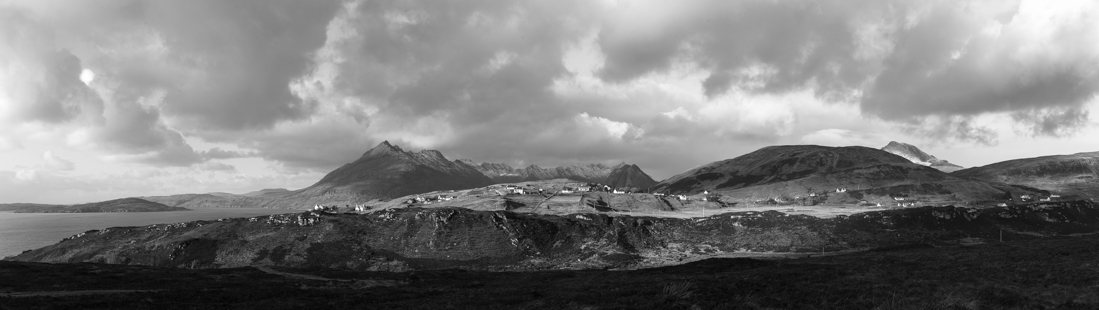
with digital - stitching a few 50mm frames may be sufficient:

Elgol and the Cullin - Isle of Skye

MM + 50mm Sonnetar 3x stitch.

ElgolMM.jpg


see it at 4k wide
 
Galen Rowell was quite successful doing landscapes with Nikon 35mm equipment. I make no excuses for not using a larger format.
That's very true, but, you don't think that the complications involved in hanging off the side of a mountain with a Deardorff or a Gandolfi strapped to his back might not have had something to do with his choice of equipment?

I'm not arguing with your preference for 35mm landscapes, simply with the example you've mentioned to support it.
Cheers
Brett
 
Galen Rowell was quite successful doing landscapes with Nikon 35mm equipment. I make no excuses for not using a larger format.

And Ansel Adams was quite successful doing landscapes with large format. You can clearly make any format work for you.

I agree with Santtu that a different format is a different experience. I see and approach photography differently through a medium format square and a waist-level finder than I do through a 35mm rectangle and an eye-level finder, and I have done landscape photography with both.

- Murray
 
Hmmm, interesting, I seldom mention tripods as I ended up feeling I was seen as a wicked Welsh troll the last time I suggested they were important items to have; even baby FED or Leica versions.

As for Ansel Adams, I don't want to argue but most people born in 1902 who were keen photographers had to use large format cameras to start with and then may have been reluctant to change. There's a fascinating account of it in "My Leica and I" which was published in 1936 or '37.

Regards, David
 
Hmmm, interesting, I seldom mention tripods as I ended up feeling I was seen as a wicked Welsh troll the last time I suggested they were important items to have; even baby FED or Leica versions.

As for Ansel Adams, I don't want to argue but most people born in 1902 who were keen photographers had to use large format cameras to start with and then may have been reluctant to change. There's a fascinating account of it in "My Leica and I" which was published in 1936 or '37.

Regards, David

Actually I feel that experiencing photography as shooting expensive labour intensive sheets is a beneficial for everyone, even in digital age. I'm not saying LF is the only option or even the best option. But it inherently slows you down and makes you wonder if this is the place to set up camera or should I go there first. Composition, exposure and meditative state of shooting comes into play more easily with LF gear. Of course you can do the same with digital P&S or even with a cellphone camera. But with quicker tools, people seem to forget to concentrate easily. I would recommend everyone to shoot a weekend with a LF gear at least once in their life for this purpose. It might be insightful for your development and make you more concentrative with your shooting. But in the end, it might not be for you and that's fine too 🙂

Some people prefer to shoot dozens of rolls per trip (and / or memory cards) and then do the selection and reframing back home. That's fine too, what ever gets you the results you're after. But for me, thinking before and spending time shooting improves my photography as well as my mental health (less stress, slower pace).
 
Actually I feel that experiencing photography as shooting expensive labour intensive sheets is a beneficial for everyone, even in digital age... Snip! Snip!

Hi,

I couldn't agree more and, strangely enough, said so this morning in a post about the old Leica Standards but then I'm coming to this forum as a lifelong slide maker.

Regards, David
 
I've been pondering doing some Landscapes of my wide open South Plains

Do you mean the South Texas Plains that includes the Edwards Plateau and the Balcones Escarpment? I'd say a wide lens and a short telephoto. The wide lens to show the wide openess. The longer lens to isolate land features, or "pile up" features such as hills on each other when you have a rim light to preserve a visual separation.

And the wide lens can be used to capture foreground elements like cacti or wildflowers with a wider vista to give a sense of place.
 
About 18 years ago I did quite a bit of landscape shooting with a Pentax 67II. I used a 55 - 100 mm zoom for most things and a 135 or a 75mm prime. The Pentax Zoom was very sharp especially at the wider angle settings. I shot with Velvia 50 and used f22, 16 ane 11 most of the time which required long exposure settings. I bracked my shots by 1/3 stop since Velvia had a very narrow latitude and wasn't very forgiving of over or under exposure. I used a Gitzo 1548 carbon fiber tripod which was very sturdy and dampened vibration well. I used a heavy Kirk ball head that was like the Arca Swiss but the Kirk would not freeze up Like the Arca Swiss the Kirk always performed beautifully. I later switched to a much smaller yet very sturdy Acratec. There is now a very many choices for tripods or ball heads.

I know that this is an old kit by new but it worked beautifully for me back then. I realize that this was pretty old school compared to today. Eventually switched to Nikon digitals and some fast Nikon Glass. - jim
 
Do you mean the South Texas Plains that includes the Edwards Plateau and the Balcones Escarpment? I'd say a wide lens and a short telephoto. The wide lens to show the wide openess. The longer lens to isolate land features, or "pile up" features such as hills on each other when you have a rim light to preserve a visual separation.

And the wide lens can be used to capture foreground elements like cacti or wildflowers with a wider vista to give a sense of place.

No actually it's the area on the south end of the panhandle around Lubbock. It's the southern end of the Great Plains .
 
No actually it's the area on the south end of the panhandle around Lubbock. It's the southern end of the Great Plains .
Oh the "other south plains." The South Plains that is part of the High Plains eco-region of Texas that is part of the Great Plains.🙂 I'm sort of jealous. On my side of Texas trees get in the way of landscapes.😀
 
That's what my wife says - she's from this area. I lived in Denton, Austin, and Houston growing up so I'm used to trees lol. But they can block any landscapes - especially in Houston.
 
Not sure removing the trees from Houston would help. I sometimes work jobs about 50 miles from Houston. If it weren't for the vegetation that area would be flat as a billiard table. 🙂
 
Gorgeous stitch with the sonnetar, wow 🙂

I shoot alot of landscapes...but for me mobility is key. I admire the Linhofs, digital MFs, etc, but for fast travel the M9 and a few lenses works very well, and of course, it can do much more as well.


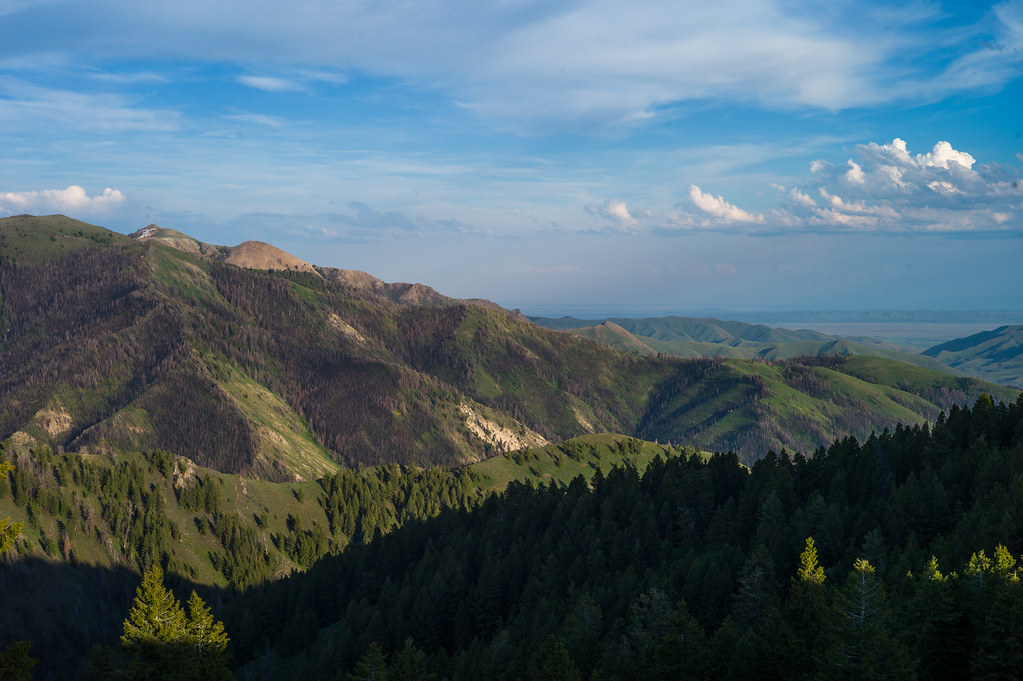
Willow Creek by unoh7, on Flickr


Westface by unoh7, on Flickr

These from this week. I own a bunch of tripods, but I never take them. I find 135 is no problem handheld if it's bright enough for a fast shutter. Luckily I prefer my water frozen, so no lust for long exposure as yet.

There are many approaches to landscape. Each involves sacrifices. The M9 lets me shoot fast and nearly anywhere.


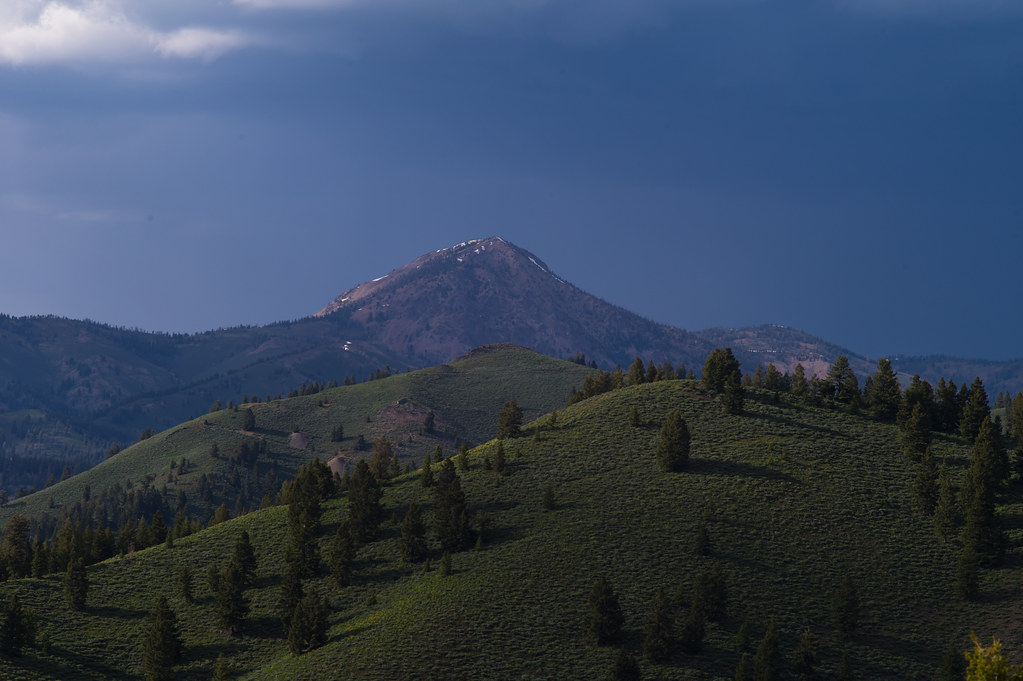
Big Peak by unoh7, on Flickr

50 and 28 cron, 135 APO. Leica glass on the M9 is very rich in color. 🙂
 
Back
Top Bottom