`3D`pop in (50mm or less) ZM lenses

I do think we are in agreement.

I think the proof would be compelling, but it would certainly represent a sad state of affairs 😀

I guess I just never got why this was such a big deal in lens discussions.
 
I think the damning piece of evidence in all of this, that lenses are responsible for this, is that fact that I've yet to see a side-by-side comparison of photos of the same scene, one made with a lens that has 3D and one without.

Ding! We have a winner.
 
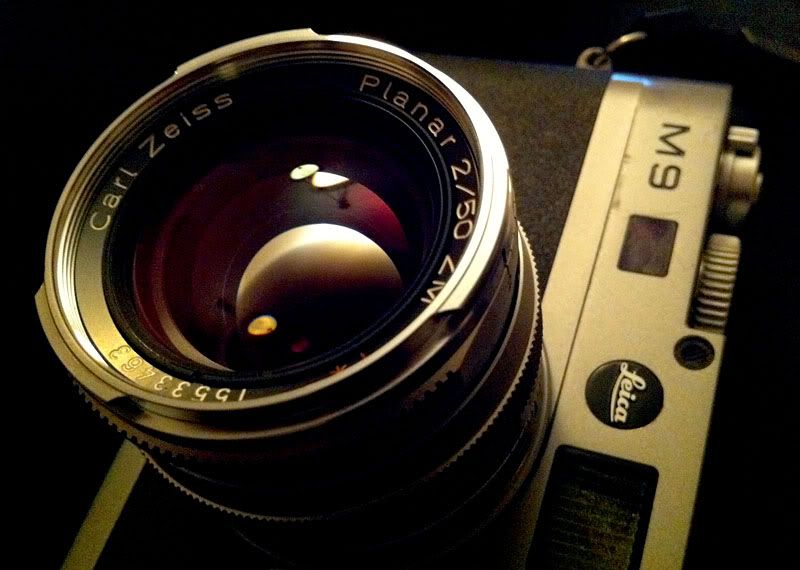
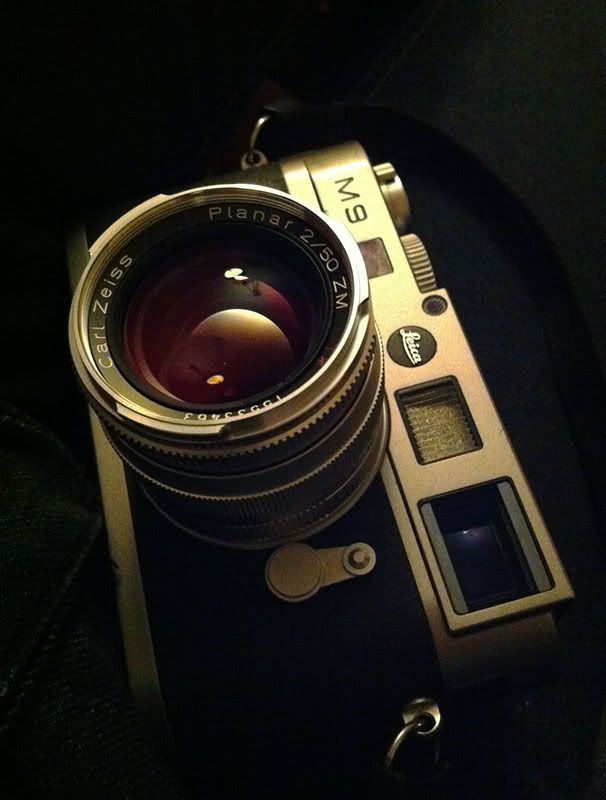
How about some camera porn to lighten up this kinda boring conversation? Pics taken in very low light on the iPhone 4 if anyone wants to know. Now that's 3D!!! 😉

pphoto.jpg


photo.jpg
 
Don't know about the ZM's but my ZE zeiss distagon 35mm f2 definitely has a certain 'pop' to images shot at wide apertures - moreso than japanese glass, even the canon 35mm f1.4L which itself is a superb lens. The zeiss has stronger contrast and (thinking how to put this without sounding loopy) more defined contours and contrast edges in both in-focus and out-of-focus areas.
 
Pop. Punch, 3D, Plastic, Dreamy...

I am no expert at photography, taking and history, neither of the arts.

But there are photos that immediately appeal to me. I do not why. I cannot
take pictures like it. I wish I could.

But I sure can enjoy looking at them!; and trying to get ' that ' look for my pics.
 
Boring picture I know, but I think this one shows just the "3D" effect that so many of us likes about the Zeiss lenses.
This is the 35mm 2.8 C-Biogon on an M8. Pretty sooc.

5220148477_4b95aa81fa_b.jpg
 
Boring picture I know, but I think this one shows just the "3D" effect that so many of us likes about the Zeiss lenses.
This is the 35mm 2.8 C-Biogon on an M8. Pretty sooc.

5220148477_4b95aa81fa_b.jpg

Good example.

After some thinking, I think the zeiss "3d" effect is best explained as images made with zeiss glass can sometimes look like they were taken by a larger format then images taken with japanese glass. For instance - pictures taken with my ZE distagon 35mm f2 on my 5d sometimes look like they were taken with a medium format camera. I can't explain why, but the spacial rendering of the lens causes it to look that way. It's a combination of certain kinds of light, shooting wide open or close to it, and a whole other host of things for sure, but I've noticed my 35mm distagon does it more then any of my other lenses.
 
Good example.

After some thinking, I think the zeiss "3d" effect is best explained as images made with zeiss glass can sometimes look like they were taken by a larger format then images taken with japanese glass. For instance - pictures taken with my ZE distagon 35mm f2 on my 5d sometimes look like they were taken with a medium format camera. I can't explain why, but the spacial rendering of the lens causes it to look that way. It's a combination of certain kinds of light, shooting wide open or close to it, and a whole other host of things for sure, but I've noticed my 35mm distagon does it more then any of my other lenses.

Thats probably because the ZE/ZF version is the best performing 35/2 in the world....outperforming the ZM model. That lens is a freak!
 
I just am not seeing any such thing as "3-D pop" in any of these photos nor in mine shot with Zeiss or other lenses, 35mm or MF. I see foreground subjects accentuated by DOF, lighting or haze but nothing I can attribute to "3-D pop".

I sometimes seem to be an outlier in these lens discussions so this may be just another one of those times.
 
Why are people referring to Cosina-made (and in some cases derivatively designed - eg. 21/4.5 ZM) lenses as 'German' lenses, or at least derisively referring to Japanese glass in comparison to Z* lenses?

Every Z* lens except the 85/2 ZM and 15/2.8 ZM are JAPANESE glass.
 
Why are people referring to Cosina-made (and in some cases derivatively designed - eg. 21/4.5 ZM) lenses as 'German' lenses, or at least derisively referring to Japanese glass in comparison to Z* lenses?

Every Z* lens except the 85/2 ZM and 15/2.8 ZM are JAPANESE glass.

So were the contax lenses made in Japan and they're famous - for good reason. They're still 100% designed by Zeiss and they use german developed and made (and Zeiss owned) Schott glass.

They're assembled in Japan, but the design and the way that they feel and work in photographs is pure zeiss. I see a strong resemblance between pictures made with my ZE 35mm f2, and the 80mm f2 planar for contax 645 for instance... I also see a fairly large difference in the characteristics of the lens compared to my Canon lenses (japanese designed and made).

For instance - with my 35L I had the default sharpening setting in LR3 set at 50 stopped down and 60 wide open. With the 35 ZE I had to back it right off to 15 stopped down and 20 wide open. I also had to back down the default contrast from +25 to +10 or sometimes lower. These are fairly big steps and repeatable with almost all photos taken. Sometimes around f2.8-f4 at medium distance with the Zeiss I have to completely turn off LR sharpening as I get get jaggie artifacts with ANY - which tells me the lens is resolving ridiculous amounts of detail in the right conditions. I've never had to do that with a lens before.

Just my experience - take it as you want 🙂
 
Back
Top Bottom