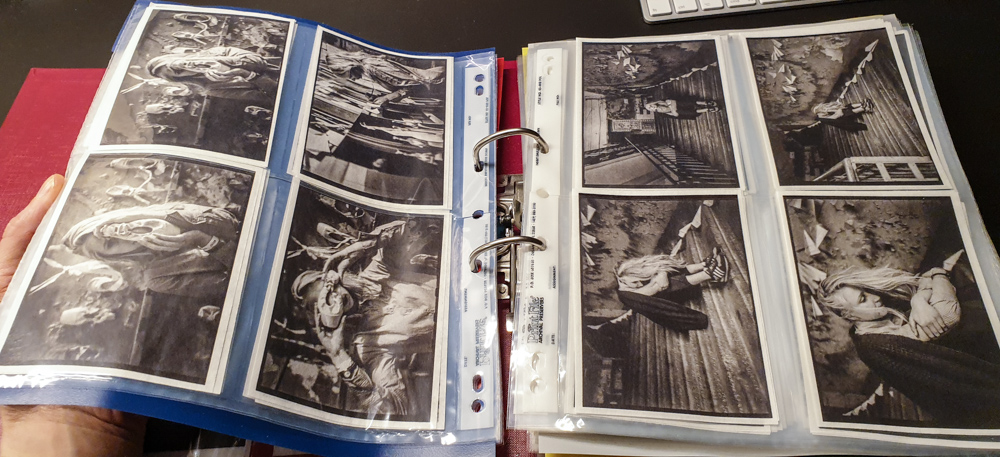
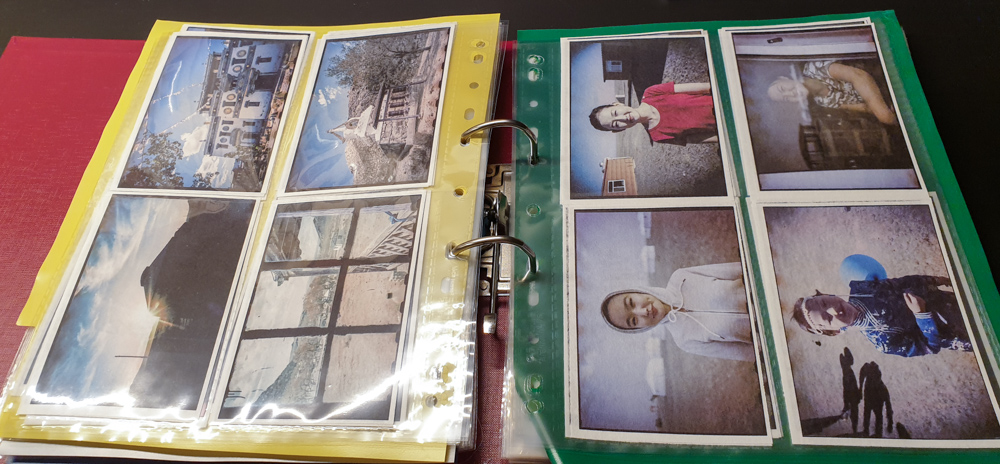
I use Piezo DN to make digital negatives to print on silver chloride paper.
Cal uses Piezo K7 for printing.
The learning curve for either isn’t as bad as it seems. Like everything you do need to dedicate the time and prints that end up in the rubbish bin. Once calibrated and practiced, I find it wastes hugely less materials than most other processes, because you can soft proof, check densities, and calibrate.
With all digital processes the thing I find worst/most disappointing is that all materials have a high rate of problems (I’d say unacceptable, but what a person will accept varies). Even the best inkjet papers have problems much more frequently than the worst silver papers had (I found Slavich and the last batches of paper from Fotochemika the worst I used). I would 100% agree with
https://theonlinephotographer.typep...her/2010/04/theyre-selling-us-crap-paper.html
Marty
Marty,
I outgrew Piezograpy K-7 and now am fully Piezography Pro.
Before it was available to the public I was kind of a "Beta" tester for a year.
PP is more evolved than K-7. I had once thought that K-7 had better mids, and PP had better shadow detail, but all this was just a matter to toning down the contrast a tad to the sweet spot.
I will say that the result from Piezography is a match made in heaven for anyone shooting a Monochrom Leica.
Also the pitfall is one would be encouraged to print big, and that "Big prints don't lie."
With Piezography Pro all I have to do is download and install a new set of curves and I can emulate and do a "Marty" and print Digital Negatives for contact printing.
The new PP is kinda seamless, flushed out, and fully developed. Also there is great-great support.
The big downside is the cost of the learning curve, and once you get serious with fine art printing you can spend a grand on just archival boxes to store prints.
I recently moved to the burbs leaving NYC because of Covid. In moving I destroyed a lot of test prints and work prints that likely cost about $20K in materials.
As a badge of honor along the way I killed a Epson 3880, a very durable printer that is considered a real workhorse. I wore out the printer from use, not dis-use.
Now that I own a house I will build out a darkroom and get back into wet printing. My current printer is an Epson 7800 that I bought for $100.00. Last year I replaced the dampers, but I secured this printer from a large format shooter that was moving back to Japan and was not going to ship the printer.
This 7800, the 7880, the 9800, and 9880 are likely the most durable Epson printers ever made and they are user servicable. I call mine "The Jersey Barrier" because of its sized. The above are known for long print head life.
The larger printers have a better paper transport, and with my 3880 I had problems with "Pinwheels" and head strikes from my heavy ink loads.
So in less than a year I will retire, and I will have both a digital and analog printing capabilities. I hope to perform a "Marty" and print DG and contact print.
Also the new Piezography PK-HD gloss black on Baryta papers is very-very much the wet print look, and the gloss overcoat makes my prints more durable for handling.
Consider how you might store and present your work. I have made books that are actually made of of my Piezography prints. At the NYC Meet-Up the term "Monster Book" was coined. I used a hand truck to bring it to the Meet-Up. LOL.
Know that the 7800 can use 24 inch rolls, so I have a book of proofs that is even bigger than the "Monster Book."
I figure with PP I can use digital prints to be my proofs for the editions of wet prints that are yet to come. Pretty much the technology is turnkey for guys like us to do "Salgado's" without the best lab in Paris printing for us.
Cal