tunalegs
Pretended Artist
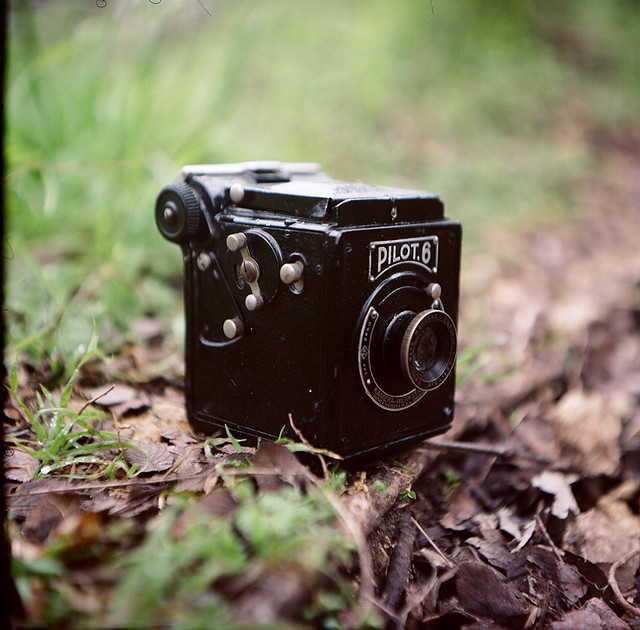
There is a concept in Japan of the beauty of impermanence, transition, simplicity - of objects, places, etc. which possess "character" that displays the action of such things. To those of us in the west this may best be likened to a combination of appreciation for patina and things rustic. This is known as wabi-sabi, and if ever I came a cross a camera which could fit into that concept of beauty, this K.W. Pilot 6 is it.
 Kamera-Werkstätten Pilot 6 by berangberang, on Flickr
I've always wanted a K.W. Pilot. It falls into that uncommon intersection of ingenious simplicity and precise quality that few cameras possess. K.W. tackled the idea of a cheap but functional SLR with brilliant ingenuity. First came the Reflex-Box, then came the Pilot 6 and Super Pilot, and finally came the Praktiflex from which all later Prakticas (and a good deal of other cameras) have descended.
 Kamera-Werkstätten Pilot 6 by berangberang, on Flickr
The Pilot 6 and the Reflex-Box both used an ingenious, though imperfect solution to the problem of creating a cheap single lens reflex. By combing the mirror and shutter into one mechanism, much of the complexity of the SLR was done away with. In basic concept the shutter of the Pilot 6 is like that of the postwar Ihagee Exa, only simpler even. When the shutter is tripped the mirror rises, and on its way up it uncovers the back of the lens. Built into the back of the mirror is a frame that extends well back into the "cone" of the camera, this frame moves with the mirror, and on it is a prong which engages a loop of metal on a metal plate that slides along the bottom of the "cone". As the mirror continues moving up, this plate is pulled up with it until it covers the back of the lens. This is the shutter of the Pilot 6. The Exa is a little bit more complex in that the "slit width" between the mirror and the following sector varies depending on which speed is selected. On the Pilot 6 the opening between the mirror and following sector is fixed, the speed is controlled by spring tension alone.
The drawback to this type of shutter is that it needs a very strong spring, and there is a lot of moving mass leading to a very strong mirror slap. The sound the Pilot 6 makes is similar to the sound of somebody slapping closed the cover of a hard-bound book. And the shake is tremendous. But the designers came up with a brilliant "half solution". The mirror does not reach the end of its travel, and consequently does not slap until after the shutter closes. One still has to hold the camera very tightly though simply to control the accelerating masses of brass and glass swinging wildly about during exposure - but mirror slap thankfully is a non-issue.
 Kamera-Werkstätten Pilot 6 by berangberang, on Flickr
An interesting design feature is the f/stop read out in front of the viewing hood. This allows one to select the f/stop without taking their eyes off the ground glass. Very useful in the days before pre-set lenses. The small knob is used for selecting, and a dial on top displays the selected aperture. If you think that viewing through an f/4.5 lens is dim - K.W. also made a version with an f/6.3 lens!
 Kamera-Werkstätten Pilot 6 by berangberang, on Flickr
So the Pilot had a lot of character even when new. Along the way this particular one picked up even more character, apparently having been taken apart and reassembled with all sorts of miss-matched screws. 🙄 The outside of the camera including all of the leather has been coated over in glossy black enamel, and there is the cracked groundglass and plating loss on nickel parts as well. This is a camera which has been used and "mended" for decades and shows some interesting character because of it. It possesses a certain rustic charm and I'm enthusiastic about seeing what I can do with it once I pick up some new 120. I admit though, it could use a little moss growing on it for a better effect. 😀
Kamera-Werkstätten Pilot 6 by berangberang, on FlickrI've always wanted a K.W. Pilot. It falls into that uncommon intersection of ingenious simplicity and precise quality that few cameras possess. K.W. tackled the idea of a cheap but functional SLR with brilliant ingenuity. First came the Reflex-Box, then came the Pilot 6 and Super Pilot, and finally came the Praktiflex from which all later Prakticas (and a good deal of other cameras) have descended.
Kamera-Werkstätten Pilot 6 by berangberang, on FlickrThe Pilot 6 and the Reflex-Box both used an ingenious, though imperfect solution to the problem of creating a cheap single lens reflex. By combing the mirror and shutter into one mechanism, much of the complexity of the SLR was done away with. In basic concept the shutter of the Pilot 6 is like that of the postwar Ihagee Exa, only simpler even. When the shutter is tripped the mirror rises, and on its way up it uncovers the back of the lens. Built into the back of the mirror is a frame that extends well back into the "cone" of the camera, this frame moves with the mirror, and on it is a prong which engages a loop of metal on a metal plate that slides along the bottom of the "cone". As the mirror continues moving up, this plate is pulled up with it until it covers the back of the lens. This is the shutter of the Pilot 6. The Exa is a little bit more complex in that the "slit width" between the mirror and the following sector varies depending on which speed is selected. On the Pilot 6 the opening between the mirror and following sector is fixed, the speed is controlled by spring tension alone.
The drawback to this type of shutter is that it needs a very strong spring, and there is a lot of moving mass leading to a very strong mirror slap. The sound the Pilot 6 makes is similar to the sound of somebody slapping closed the cover of a hard-bound book. And the shake is tremendous. But the designers came up with a brilliant "half solution". The mirror does not reach the end of its travel, and consequently does not slap until after the shutter closes. One still has to hold the camera very tightly though simply to control the accelerating masses of brass and glass swinging wildly about during exposure - but mirror slap thankfully is a non-issue.
Kamera-Werkstätten Pilot 6 by berangberang, on FlickrAn interesting design feature is the f/stop read out in front of the viewing hood. This allows one to select the f/stop without taking their eyes off the ground glass. Very useful in the days before pre-set lenses. The small knob is used for selecting, and a dial on top displays the selected aperture. If you think that viewing through an f/4.5 lens is dim - K.W. also made a version with an f/6.3 lens!
Kamera-Werkstätten Pilot 6 by berangberang, on FlickrSo the Pilot had a lot of character even when new. Along the way this particular one picked up even more character, apparently having been taken apart and reassembled with all sorts of miss-matched screws. 🙄 The outside of the camera including all of the leather has been coated over in glossy black enamel, and there is the cracked groundglass and plating loss on nickel parts as well. This is a camera which has been used and "mended" for decades and shows some interesting character because of it. It possesses a certain rustic charm and I'm enthusiastic about seeing what I can do with it once I pick up some new 120. I admit though, it could use a little moss growing on it for a better effect. 😀