No meter, no big deal

I see what you mean and I don't want to disagree, but like others I am loath to support the creative enhancement argument. Except to say that recently I finished off a roll of ISO 25 film in a wonderful Pentax Spotmatic for which there is no battery I can find. It has a 55mm lens and looking through an SLR finder with that field of view was thrilling and indeed the framing, and some consideration of focus and depth of field were the only things in my mind. I got a few good shots and one I was very happy with, just in the streets near work. I think therefore being confident about exposure removes an element, freeing the mind for other more creative aspects of taking a photograph. A bit like having an autoexposure camera, if you don't mind me saying.....
 
I see what you mean and I don't want to disagree, but like others I am loath to support the creative enhancement argument. Except to say that recently I finished off a roll of ISO 25 film in a wonderful Pentax Spotmatic for which there is no battery I can find. It has a 55mm lens and looking through an SLR finder with that field of view was thrilling and indeed the framing, and some consideration of focus and depth of field were the only things in my mind.
Framing, focus, and depth of field were the only things in your mind after your mind previously suggested to you an appropriate shutter speed and f-stop for proper exposure. As you were considering depth of field, presumably you had in mind the possible need to change shutter speed if you changed f-stop.
 
I use the meter in my cameras all the time, but I am fond of playing a game of guess the setting before I look at the meter. Most of the time my best guess is close enough to make no difference. It is my way of ensuring that I am able to use any camera if the battery fails given a mechanical shutter.
 
I use the meter in my cameras all the time, but I am fond of playing a game of guess the setting before I look at the meter. Most of the time my best guess is close enough to make no difference. It is my way of ensuring that I am able to use any camera if the battery fails given a mechanical shutter.
That's an excellent practice, just don't suggest it puts you more fully in the creative process many times over.
 
Just a reminder: My Rollei MX has an exposure table on its back. Mind you, just ASA 100 and 50. Says things like "sunlight," "cloudy," etc. I agree, however, that color slide film calls for a meter -- just like Kodachrome did.

For 35, I've shot slide film almost exclusively since 2014. None of my 35mm cameras (until just a few weeks ago) have had a meter. Slide film is actually a lot easier to expose for than people make it out to be. All one has to do is decide which object in the frame they want exposed "properly" and let everything else fall where it may.

An in camera meter would've borked up a shot like this:

JB27 by Berang Berang, on Flickr

I wanted flare, and I got it; the camera, had it a meter to begin with, would have more than likely decided I needed a lot less exposure in this frame.

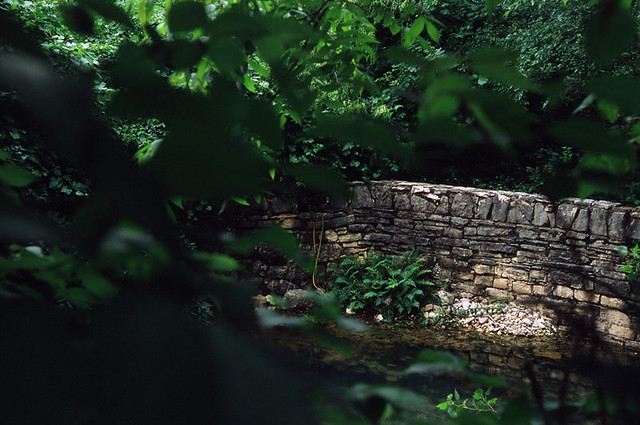
wall by Berang Berang, on Flickr

Exposing on slide film is like the exposure equivalent of shooting with a shallow depth of field. You expose your subject "in focus", and let anything else fall out of it.
 
I decided to be a practitioner of Sunny-16 since it means one less piece of gear I need to carry, look at before taking the photo, and then making sure I don't drop it.

But man, it would be nice to have a meter in every camera. Especially all those times I talk myself out of the proper setting.

PF
 
The human eye is notorious for not being able to judge the amount of light and sunny 16 is a guide but just that. Luckily, black and white film has enough latitude that even an inept photographer can get a printable image. I challenge you to shoot slide film without a meter. You will bring back more bad exposures then usable ones.

There is a reason Ansel Adams used a light meter.
 
The human eye is notorious for not being able to judge the amount of light and sunny 16 is a guide but just that. Luckily, black and white film has enough latitude that even an inept photographer can get a printable image. I challenge you to shoot slide film without a meter. You will bring back more bad exposures then usable ones.

There is a reason Ansel Adams used a light meter.

Shooting slides without a meter is what I have been doing for the past four years... The only real issue I have is when I convince myself there's "still enough light" even though I've run out of shutter speeds and aperture for what's available. Once the sun is over the the horizon and the shadows are gone, judging light is just guessing. As long as the sun is up, doesn't matter whether it's clear, cloudy, storming or foggy. You learn to judge it.

table and chairs by Berang Berang, on Flickr

cabriolet by Berang Berang, on Flickr

fence by Berang Berang, on Flickr

steps by Berang Berang, on Flickr

Smiley Porsche 356 by Berang Berang, on Flickr

jb24 by Berang Berang, on Flickr

foot scratch by Berang Berang, on Flickr

tree by Berang Berang, on Flickr

Ukishima Corner by Berang Berang, on Flickr

Demolition by Berang Berang, on Flickr

Family by Berang Berang, on Flickr

Super Deluxe by Berang Berang, on Flickr

scooter by Berang Berang, on Flickr

Not a single photo in that lot was taken at f/16 either.
 
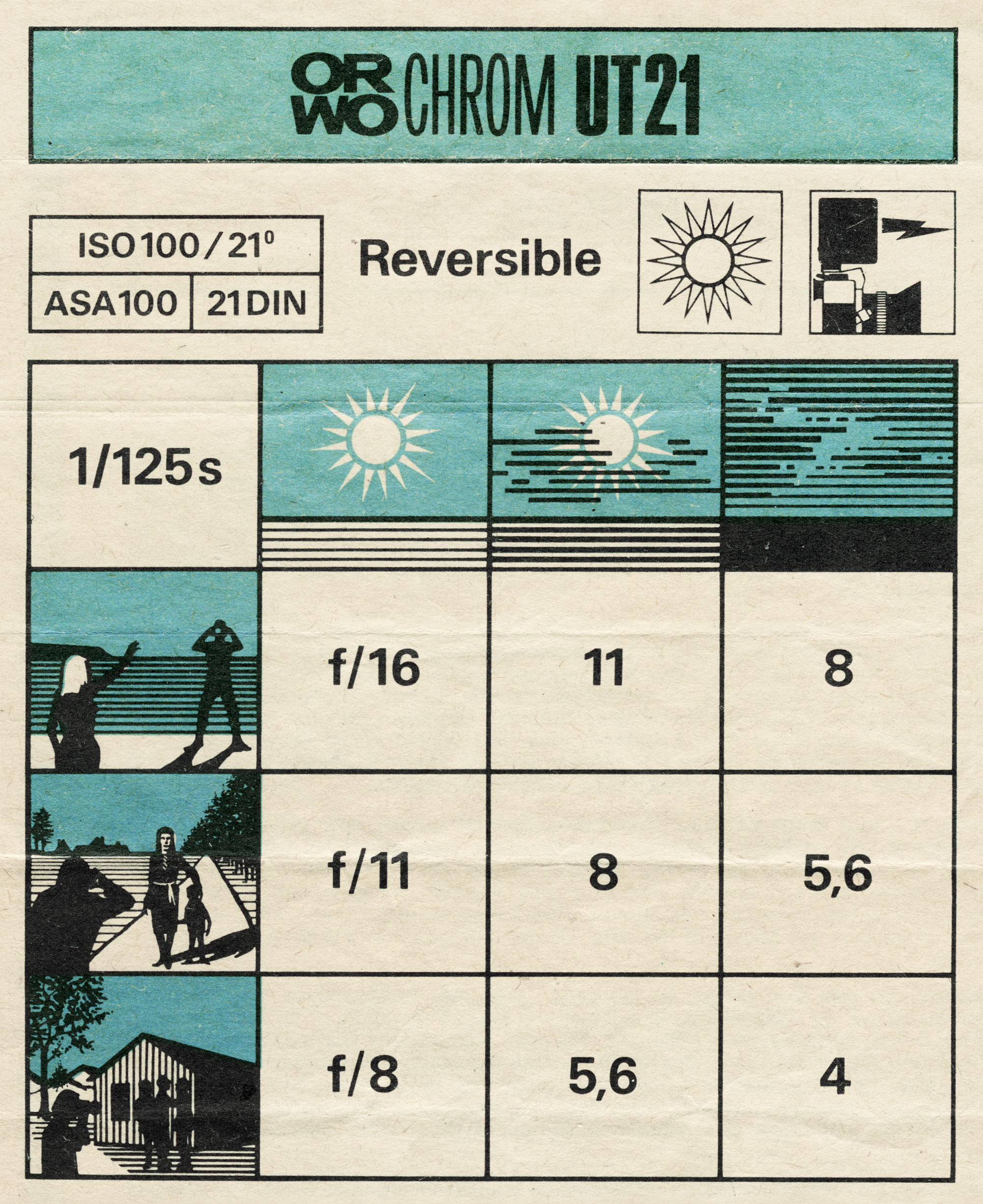
Been old fartino myself I remember taking slide pictures with FED-2. No meter, no iPhone, just exposure chart which was included with each film. I guess, it was the norm, back then...

sunny-16-rule-orwo-chrom-ut21.jpg

Sorry, Sasha Krasnov has only big picture.
http://skrasnov.com/blog/sunny-16-rule/
 
Nice shuts. But to learn this skills, How many incorrect exposure you have per roll?

Many years of shooting B&W and C41. I had shot the occasional roll of E6, but it wasn't until about five years ago when I decided I was never going to re-set up my darkroom that I started shooting E6 almost exclusively. So yes many years of experience are put to work, although honestly if you're good enough to eyeball exposure for B&W you're good enough to eyeball exposure for slide film. You just have to remind yourself to be picky about what you want when taking the picture, because there's no dodging or burning later. Keep that in mind and you're set I think.
 
Yes, and do you bracket?

Not unless it's a very contrasty shot and I'm hoping one or the other exposure might get more detail where I want it.

This is a typical roll. A couple of shots are either over or under exposed, but 34-35 decent ones out of 37 or so is not bad. Camera was an Edixa Prismaflex. Note several photos suffer from veiling flare from my old Enna wide angle, but exposure is still more or less correct :
 

Attachments

  • slideroll.jpg
    slideroll.jpg
    24.5 KB · Views: 0
Been old fartino myself I remember taking slide pictures with FED-2. No meter, no iPhone, just exposure chart which was included with each film. I guess, it was the norm, back then...

sunny-16-rule-orwo-chrom-ut21.jpg

Sorry, Sasha Krasnov has only big picture.
http://skrasnov.com/blog/sunny-16-rule/

I took a lot of photos that way, including crime scene photos with a Welta Welti and even a Minolta 16. And that included color negative and slide, usually Kodachrome in the Welti. Kodak used to help keep a chain of custody which was accepted by all US courts, including military.

The included data sheet always gave me good photos, although there were times I had to make adjustments for unusual light conditions.
 
It's 2 variables. Not really rocket science, is it? Like drilling a hole: how wide and how deep. You can eye ball it or measure it. Certainly no "artistry" involved.
 
Back
Top Bottom