I disagree with Roger Hicks' advice to ignore critical theory and philosophy relating to art and photography - a philistine attitude!
I do agree with him, though, that you need to "THINK" - Barthes, Sontag et al. all had/have interesting things to say about photography, but it's up to you to decide how relevant their ideas are not only to photography in general but to you in particular.
I came to art theory (I have an MA Photography degree) via a science/medical background (I also have BSc Chemistry degree), so I gave my tutors hell on my photography course, taking a very empirical - or at least
ontological - approach. For example, I refused point blank to explain anything in terms of Freudian psychoanalysis (he was brilliant in many ways - but most of his theories are bizarre and fail to hold up to modern science). None the less, to have ignored Freud because I disagree with his theories would have been foolish and naive: I read Freud's work when required, and if I disagreed I provided a rigorous counter-argument (which was not "the emperor is not in fact wearing any clothes"!).
Despite my scepticism and careful scrutiny of the theories I encountered during my MA, I found art/critical theory extremely useful in understanding how photographs and art function within our culture - which, ultimately, not only allowed me to appreciate photographs more completely but also improved my ability to take better photographs.
My favourite quote by Susan Sontag - and the reason why I'm an art photographer and not a painter:
"A photograph is not only an image (as a painting is an image), an interpretation of the real; it is also a trace, something directly stencilled off the real, like a footprint or a death mask. "
There are a lot of titles in this thread - and a lot of them are heavy going! Especially the Continental authors: a peculiarity of their brand of writing is extreme circumlocution, unlike Anglo-Saxon philosophy (Bertrand Russell is far more down to earth!). Unfortunately, the Continental theorists wrote many influential works so there is a lot of obtuse language to wade through to extract what are often straightforward - albeit important - concepts...
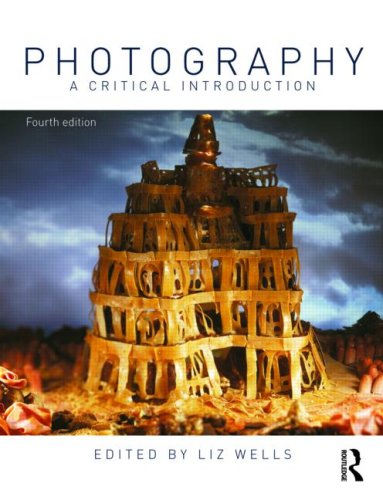
As an introduction, I'd recommend
this book - a standard introductory textbook on many British BA Photography degrees. It is accessible, well written and cheap, and will give the reader a good basic understanding of art theory as applied to photography.
Ignore Roger's prejudices - but do be appropriately critical when reading critical theory! <grin>