Photos with the Contax I.

Great shots, Deklari!

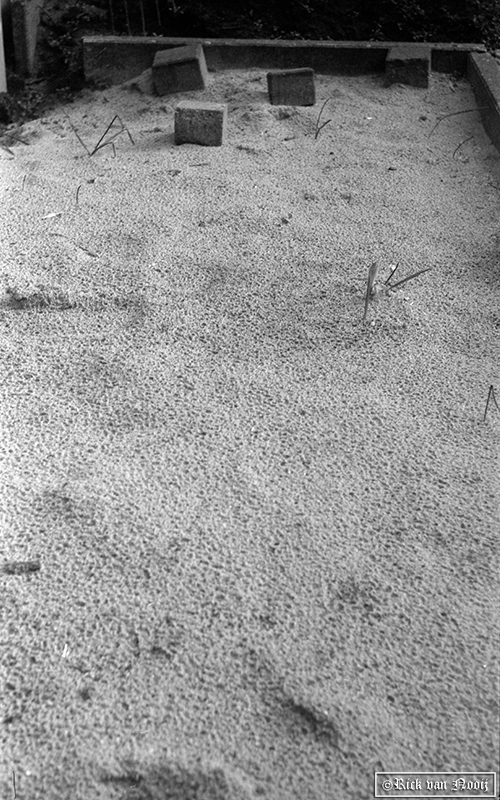
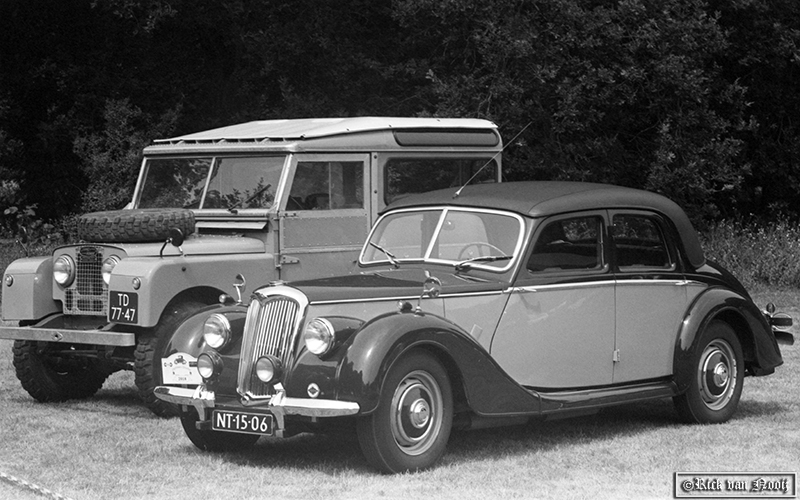
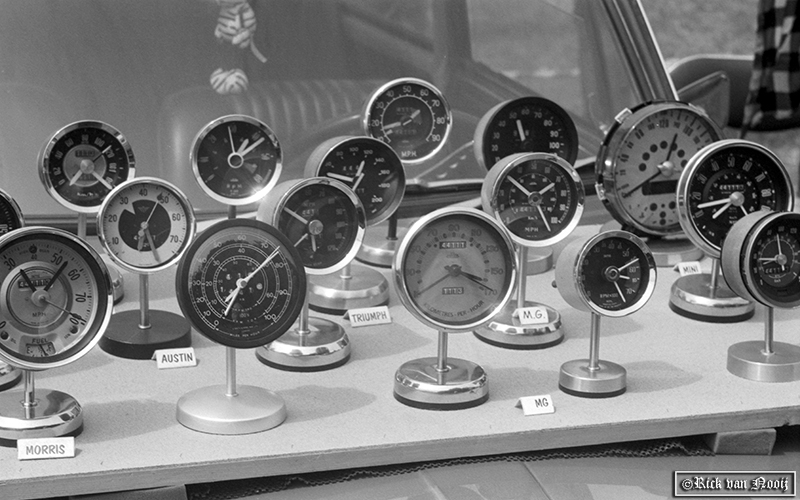
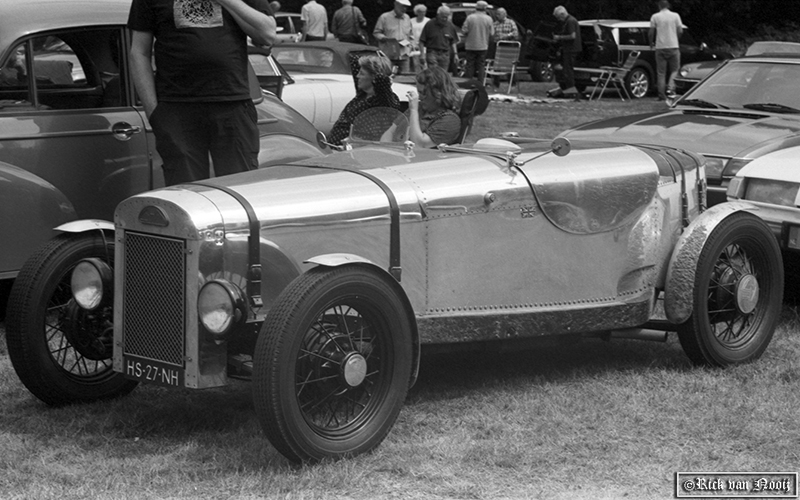
It seems that your second cutain hesitates just before closing. I've had the same issue. Maybe just a half turn tension helps.

It does not look like a developement issue. How can this small strip be over-developed?

Erik.
 
Not enough developer in the tank perhaps? Though the dividing line looks too even across the frames for that. Bromide-drag from stand developing never looks that staight either.

I agree with Erik that it looks like the closing curtain is not traveling smoothly for the last couple of millimeters.
In the photo of the park you can see some camera shake in the lighter part at the top that's not visible in the rest of the photo.

I think my contax suffers from a slightly similar effect when not shooting it horizontally

CT170306.jpg
 
Reviving this thread with an image I took yesterday with my Contax I(f) and 21mm f/4.5 Zeiss Biogon, on TMX:

contaxi-0275ss.jpg


The Contax I is a pain in the ass sometimes but a lot of fun to shoot when it works.
 
Hi Corran,

Thanks for you sharing - I've never seen an images from this classic Biogon wide-angle. It seems striking for the low distortion for its age.

Was it shot wide open? The contrast range has exceeded a 2.5 stop difference between the centre and edge in the image. Perhaps this is related to the film, developing conditions and lighting or are you finding it relates to the mechanical design of the extreme wide-angle?

In contrast, the modern Carl Zeiss Biogon 21mm f2.8 suffers from <1 stop light fall off.

Kind regards,
RJ
 
RJ,

I was shooting wide-open or close to it due to how dark it was. However, there was light coming through the trees and illuminating the undergrowth, and this (along with editing of the scanned film) is more likely to be the culprit. That said, despite the Biogon's innovative design that reduces vignetting to cos^3, it still does have fall-off typical of wide angle lenses. I just couldn't tell you how much exactly. I imagine the modern Biogon is a more telecentric design, which reduces vignetting further as well as improves performance on digital sensors, but the trade-off there is size. I also have a 75mm Biogon for my 4x5 system and it has less fall-off than traditional designs like the Super Angulon but still has some, which is apparent when shooting both types of lenses.

I actually have not only the 21mm Biogon, but the Nikkor 2.1cm f/4 (F-mount, but can be adapted to RF), which I believe is a Super Angulon type lens, as well as a modern Voigtlander 21mm f/4 Skopar. I suppose one day I should shoot them back-to-back (and maybe include my retrofocus 20mm f/4 AIS Nikkor too) and see the differences. I'm generally not much of a lens tester though.
 
Hi Corran,

Thanks for clarifying. I wonder if the imaging emulsion is generous in latitude.

It's an iconic lens which has been just wide off my radar despite its superior convenient size. Zeiss really nailed the Contax II era with their diminutive 21 & 35mm Biogons & the collapsible 5cm f1.5 Sonnar. This trio of lenses is all the travel photographer of the 1930s could wish for.

Perhaps the vignetting is a little surprising - I don't know the 75mm Biogon, being more of a Super Angulon 47mm XL user on 5x4inch. This has a 1.5stop fall off diapositive film, although on black and white FP4+ and Rollei IR400, I think I am getting away without using the IIIc central filter.

Similarly in whole plate (8.5 x 6.5inch), the SA 90mm XL avoids the requirement for the centre filter in black and white film. I'm hoping that the fall off for your 21mm f4.5 is incidental to the lighting condition, otherwise the lens will remain off radar for me. The Super Angulons are great for light fall off at such extreme.

I've used the Skopar 21mm f4 lens and parted ways. It doesn't compare favourably to the Skopar 25mm f4 in terms of distortion, vignetting nor flexibility (the 25mm Skopar is rangefinder coupled for the Contax/Nikon RF mount, unlike the 21mm, which enables a small degree of defocussing control).

What is odd about these Voigtlander wideangles, is the use of the same pancake Skopar housing and aperture configuration - you can see that if the aperture ring was fully removed, the 21mm or 25mm lenses would open up to f2.8 wide-open, which would have some terrific light fall out and edge to edge optical aberration, albeit functionless at all other aperture settings.

I've not figured out how to mount any other wide-angle, save the designed Contax/Nikkor ones on the Contax. You seem to love this ultra wide-angle end as much as I do. The Leica screw thread is really handy for this reason - it's incredible how well a retrofocus Zeiss Distagon 16mm f2.8 performs, even with the semi-fisheye curvature. The illumination across the field at f2.8 is impressive - much more than the Zeiss Flektogon 20mm f2.8.

That's correct - the CZ 21mm f2.8modern Biogon feels more orthographic on film and is extremely flare resistant. Still, the pancake design of the original 21mm Biogon f2.8 makes it more likely to be the lens on the camera.

RJ
 
Super Angulon 47mm XL user on 5x4inch. This has a 1.5stop fall off diapositive film

Now you're talking! I have a 47mm XL, and I love the ridiculous wide angle. As for fall-off, it has a lot. I use the CF regardless of positive film or black and white. I think it's much more than 1.5 stops. I don't remember the exact formula - if you want to know I know some of the guys on the LF forum will tell you.

That's another thread for another day - for now, let's talk about the Biogon and Super Angulon designs. I could be wrong, but I was under the impression that generally speaking, the Super Angulon type lenses should have more fall-off than a Biogon type lens, all things being equal.

By the way, speaking of the Biogons, I do also have a beautiful post-war, multi-coated 35mm f/2.8 Biogon. I was lucky to pick it up attached to a camera very cheaply. It is a stupendous performer. It, the 21mm, and the classic 50mm f/1.5 Sonnar all have a gorgeous look to them. One of these days I'd like to get a Bessa R2C to use them more regularly with a modern camera, but I also use them on my Nikon rangefinders occasionally.
 
The 47mm XL is superb - it really works well in tight spaces with a plane parallel rear standard.

The literature states that the proper IIIc central ND filter is a +2.0stop correction; I've always found +1.5stop on slide film preferable, perhaps due to a tendency to underexpose slide and f22 apertures. Unfortunately with the IIIc filter diameter of 86mm, even a step-up 95mm infrared filter on top demonstrates mechanical vignetting at the edges, challenging the simultaneous use of the central ND filter. It makes working with the Contax miniature format utterly delightful.

You're spot on about the Biogon' superiority in controlling fall-off over the Super Angulon - perhaps this is why the light fall off in the image is surprising. This era of 21mm f4.5 Biogon commands as much as the modern day iteration - you're very fortunate to have the trio of Zeiss lenses with a Contax I original - period authenticity more so with a Contax II!

Well done scoring on a post-war Biogon. Perhaps I feel less warm towards the battery dependency of the R2C. The Contax rangefinders are superb tools - the II in particular, when serviced at least once every 15 years, which just never goes out of rangefinder alignment.

RJ
 
Finally got round to feeding some film through the Contax I v5 I repaired earlier this year.
Rangefinder still needs a small adjustment, but it seems to be working alright.

BOD180601.jpg


BOD180608.jpg


1/200th of at second f/11,
Ross 3.5 inch f/3.5 Definex
Kodak Double-X in HC-110
 
I still haven't bothered fine-tuning the RF on this one. To be honest I kind of forgot about it when I shot the roll, but it is only noticeable on that last close-up.
 
Back
Top Bottom