Rafael
Mandlerian
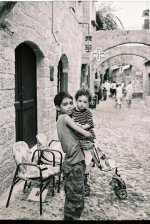
My wife and I recently had our first child, an event that changed my photographic life (as well as the rest of my life!) quite dramatically. For starters, I have had far less time to spend on RFF of late! It is no longer as easy as it was for me to just pick up a camera and wander the streets making photographs for a few hours. But on the positive side, I have a new primary subject for my photography. And it has been while photographing my son that I have developed a new perspective, or possibly a new way of describing an old perspective, on photographing people.
It occurred to me the other day that photography is not something that I do to my son. It is something that I do with him. It is a means through which we interact. And this realisation got me thinking about street photography. Many people often worry about how they react when they photograph a stranger on the street and that person notices them. If you think of photography as something that you are doing to people on the street, then you are likely to feel "caught in the act" when they notice you. However, if you approach street photography as a type of interaction with people on the street, I think that your reaction might be quite different.
I have read comments from quite a few people here expressing the view that street photographers should have a clear idea in mind of why they are taking photographs of people on the street. I think that I now better understand why this is so. If you think of your photography as a type of interaction with the people you are photographing, in other words, your decision to press the shutter release at a particular moment is a response to them (be it a statement that you wish to make, or a question that you wish to raise, or a feeling that you have), you are unlikely to feel "caught" when your subject notices you.
Another way of thinking about this is to reflect on the words of Immanuel Kant. Though I am no Kantian, I believe that his injunction never to treat others merely as means but always also as ends in themselves provides us with some important guidance as street photographers. Obviously, a street photographer uses his or her subjects as means to an end to a certain extent. But, if you refrain from ever using your subjects entirely as means to an end, if you think of photography as something that, at least to a certain extent, you are doing with your subject rather than to him or her, I think that you will come to feel much more comfortable making photographs of strangers on the street and you won't feel caught when they notice you. Just my 2 cents for the day.
It occurred to me the other day that photography is not something that I do to my son. It is something that I do with him. It is a means through which we interact. And this realisation got me thinking about street photography. Many people often worry about how they react when they photograph a stranger on the street and that person notices them. If you think of photography as something that you are doing to people on the street, then you are likely to feel "caught in the act" when they notice you. However, if you approach street photography as a type of interaction with people on the street, I think that your reaction might be quite different.
I have read comments from quite a few people here expressing the view that street photographers should have a clear idea in mind of why they are taking photographs of people on the street. I think that I now better understand why this is so. If you think of your photography as a type of interaction with the people you are photographing, in other words, your decision to press the shutter release at a particular moment is a response to them (be it a statement that you wish to make, or a question that you wish to raise, or a feeling that you have), you are unlikely to feel "caught" when your subject notices you.
Another way of thinking about this is to reflect on the words of Immanuel Kant. Though I am no Kantian, I believe that his injunction never to treat others merely as means but always also as ends in themselves provides us with some important guidance as street photographers. Obviously, a street photographer uses his or her subjects as means to an end to a certain extent. But, if you refrain from ever using your subjects entirely as means to an end, if you think of photography as something that, at least to a certain extent, you are doing with your subject rather than to him or her, I think that you will come to feel much more comfortable making photographs of strangers on the street and you won't feel caught when they notice you. Just my 2 cents for the day.
Last edited: