The Murder of B&W

Status
Not open for further replies.
U

upceci

Guest
Why B&W photography has lost its charm? I got into photography because I liked the B&W images of certain photographers. Now, even despite all these years, those photographers and their B&W images still look superior to me compared to anything out there today. Today there are two types of B&W images, flat and dull digital conversions and film scans, contrasty and overcooked digital conversions and film scans. How did it come to this?
 
Not hard to figure out:

(1) ANYONE can do a B+W conversion -- no skill involved

(2) Seeing 'real' prints shows you what can be done. Seeing on-screen garbage rarely does (but cf, for example, Chriscrawford's stuff).

(3) Sturgeon's Law: 90% of anything is crap, and with 10,000x as many pictures out there, even of skill levels had remained the same, there'd be 10,000x as much crap.

Cheers,

R.
 
Someone posted a while ago 2 photos, one inkjet and one scanned wet print, and we all thought the inkjet was the real print. It's all about the skill of the operator. As Roger said, too much garbage covers the good stuff.
 
Few photographers develop their own film or make their own prints or go to galleries, or buy high quality photo books so they don't know what a good print looks like and the garbage that appears on screens is accepted.
 
Today there are two types of B&W images, flat and dull digital conversions and film scans, contrasty and overcooked digital conversions and film scans. How did it come to this?

You are looking in the wrong places... go to a museum, go to a gallery, etc. Also, you are comparing the edited history of the past versus the unedited present. Not exactly fair I'd say.
 
I think, you have mistaken the MURDER OF PHOTOGRAPHY for the murder of B&W. Giving an auto everything camera to 300.000.000 people is not going to produce 300.000.000 good photographers, but rather a sea of crap with some gems, few and far between. As to the technical aspect of today's B&W images, many of them are of the high contrast, pushed film effect type. The reasons are numerous: the difficulty of producing good tonality from digital sensors, ever more contrasty lenses, perhaps low average post processing technical ability, and finally, the fact that 95% of people taking photographs today, have not seen a good B&W print in their lives, so they don't even know their images suck.
If you want high quality B&W prints, there are many ways of getting there, but it takes some effort and conscious choices. Personally, I work with hybrid workflow and am quite satisfied with the results. BTW, Ilford has just released a new baryta inkjet paper, dedicated for B&W printing.

HP5+ in HC110
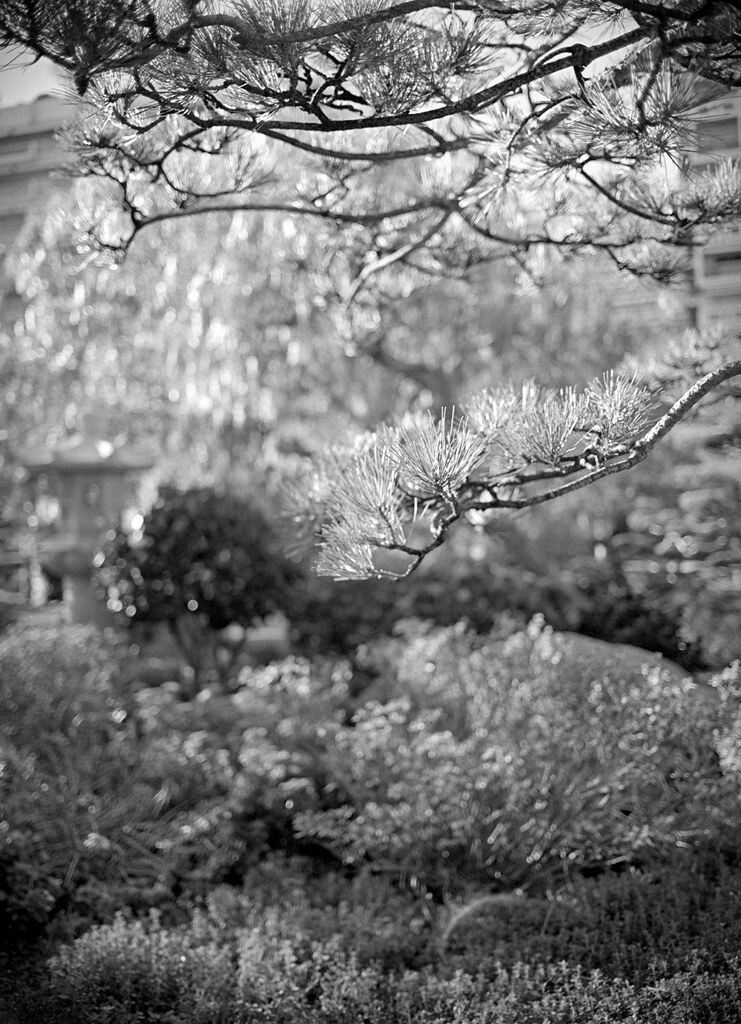
MF20130104 by mfogiel, on Flickr
 
This is exactly my point, there are already established standards for great B&W images and yet most people who make B&W images these days seems oblivious to that... This is disheartening because all that legacy and hard work of the past seem irrelevant.
 
This is exactly my point, there are already established standards for great B&W images and yet most people who make B&W images these days seems oblivious to that... This is disheartening because all that legacy and hard work of the past seem irrelevant.

established standards ?

and . . . the legacy and hard work of the past may have an enormous influence on what someone produces, even if their style is radically different.

you know, people don't necessarily want to do the same thing all over again.
 
I think, you have mistaken the MURDER OF PHOTOGRAPHY for the murder of B&W. Giving an auto everything camera to 300.000.000 people is not going to produce 300.000.000 good photographers, but rather a sea of crap with some gems, few and far between. As to the technical aspect of today's B&W images, many of them are of the high contrast, pushed film effect type. The reasons are numerous: the difficulty of producing good tonality from digital sensors, ever more contrasty lenses, perhaps low average post processing technical ability, and finally, the fact that 95% of people taking photographs today, have not seen a good B&W print in their lives, so they don't even know their images suck.
If you want high quality B&W prints, there are many ways of getting there, but it takes some effort and conscious choices. Personally, I work with hybrid workflow and am quite satisfied with the results. BTW, Ilford has just released a new baryta inkjet paper, dedicated for B&W printing.

HP5+ in HC110
MF20130104 by mfogiel, on Flickr

with all do respect, that image is really a good example of what I was talking about, the sort of B&W which is more like gray&gray... this is not abut film and digital, infact some of the worst looking b&w today are film scans.
 
you know, people don't necessarily want to do the same thing all over again.

That is not a good excuse for incompetence... People should only discard established standards if they have something better to offer.
 
That is not a good excuse for incompetence... People should only discard established standards if they have something better to offer.

I disagree, people should discard established standards for whatever reason they please. When i got into photography, digital was the established standard, I shouldn't have prove film is better to shoot film, I use film because I want to, no other reason.
 
Why B&W photography has lost its charm? I got into photography because I liked the B&W images of certain photographers. Now, even despite all these years, those photographers and their B&W images still look superior to me compared to anything out there today.

You've looked at everything out there today? Where do you find the time?
 
This is exactly my point, there are already established standards for great B&W images and yet most people who make B&W images these days seems oblivious to that... This is disheartening because all that legacy and hard work of the past seem irrelevant.

How about a learning curve and the fact that not everyone is going to be great? Again, you are comparing the edited history of the past (and its masters) versus the glut of images today (many from non-masters). You have to try harder in the present to find the great stuff. It does exist though.
 
I have to agree that it's just a matter of where you look. It is actually quite difficult to convert images to black and white with the click of a button. Having a background in the zone system for instance, helps a lot. Like anything else in photography, it's a learned skill to work in black and white, and there will be a vast curve in success throughout all those working at it.

I say this with all good will, but maybe unplug from the internet a while (he says as he posts on RFF 😉 ) - but really, go see a good show in person, or if that's not possible, go buy/borrow a good photo book and refresh. Seeing the trillions of images on the web over and over can numb any palette...

Matt
 
Just to annoy you I'll post some more of the "modern" B&W film garbage. Yes, I know the film is considered garbage and also it's hated by many people in the age of digital convenience. Thus I'm deeply sorry for the inconvenience by posting a simple film scan...


Sublime by tsiklonaut, on Flickr​
 
Arguing over subjective viewpoints is akin to insanity.

To the OP.
Sorry, I won't be going to the funeral.
Too busy doing what some may see as my part in twisting the knife 😉
 
Have you ever been to Times Square? It's like eating dinner at Red Lobster in Times Square, you're going where everyone else is going. You're looking in the wrong place. There are really great seafood places in NYC, but for some reason Red Lobster is booming.
 
Status
Not open for further replies.
Back
Top Bottom
