Uncommon & Unconventional Lenses on the M9 & M 240?

Mine is just an M8 , but I bought it with vintage style lenses in mind and it's usually wedded to a 1959 J3 in genuine Contax mount gifted by Brian Sweeney for my Contax/Kiev 4 hybrid .

I also have other Jupiters , a Helios , a stunning 50/f3.5 Fed collapsible which just happens to align with the Leica, plus a beautifully clean Summitar and Elmar from the 50s.

The most modern lens I own is the tiny 35mm Color Scopar , so no attempt to use the camera to it's full potential - a more up to date M would probably be wasted on these lenses .
But I love it , and that's all that matters to me.

dee
 
Mine is just an M8
...
The most modern lens I own is the tiny 35mm Color Scopar , so no attempt to use the camera to it's full potential - a more up to date M would probably be wasted on these lenses . ...

I dunno. The Color Skopar 35mm f/2.5 P did a beautiful job on my M9 and likely does an even better job on the M-P; I just haven't had the moment to give it a try yet. 🙂

G
 
Dee, you're totally right. It's whatever gives you pleasure while shooting. There's absolutely nothing wrong with the set of lenses that you listed. I owned a 1950's collapsible Elmar for a while, I loved the way it rendered images.

+1 Godfrey, that Color Skopar has a stellar reputation.
 
The M8 was an inheritance purchase - I could not afford Leitz lenses except for the Summitar/Elmar borrowed from the IIIc .
I love the Color Scopar - the sole opportunity for me to borrow a Leitz 35mm lens was at a Leica worship in London where the restriction was to use monochrome .
The shots are great - and I had the most useable photos from the group.
Following on from that experience , I used the Color Scopar - a £250 lens at the time and was amazed how good it was , but I could not comment on how it compares with the 'real' thing !!
It is also light and neat on the camera !!
 
Today I tried out my LTM adapter on the M 240. Today's experiment was with another Soviet invention, the proletarian Industar 61 L/D.

The Industar 61 L/D has the distinction of being coated with Lanthanum, giving it better contrast but also the ability to emit radiation. When I was "chimping" through my photos this afternoon, I realized I had the lens pointed directly into my lap.

Good thing I've already had my kids. LOL!

Anyway, the lens was fun to use. Its build quality is amongst the worst of any FSU lens I've tried. The focus throw was stiff and uneven, the aperture clicks were rough, and the whole assembly felt cheap. On the other hand, it took surprisingly good photos! I was quite impressed since digital sensors can plainly reveal any major lens failings without hesitation. But the Industar 61 L/D held up to scrutiny.

The only major problem I encountered was severe veiling flare, but that would be easily remedied by a hood of some sort. It was also an extremely sunny day where I live, so the sun was quite harsh in the afternoon.

Here's a couple of samples of this "radioactive" no-frills lens. No changes have been made to the photos except re-sizing or mild cropping.

Image #1: Old Chevy -- front detail

15gth6e.jpg


Image #2: Tipi detail, facing south-west

beyjgh.jpg


Image #3: Down With Corporate Giveaways!

1567j21.jpg
 
The Industar 61 L/D has the distinction of being coated with Lanthanum, giving it better contrast but also the ability to emit radiation. When I was "chimping" through my photos this afternoon, I realized I had the lens pointed directly into my lap.

Good thing I've already had my kids. LOL!

I mentioned that my 35/1.8 Nikkor in LTM was radioactive, and the glass has experienced some yellowing due to nuclear hardening over the decades. At this point I can measure about a half stop offset in my metering due to the effect of having a built in yellow filter.

Does your lens have a built in yellow filter like my lens? I don't see any yellow tint in your shots above.

Also know that the level of radiation is rather small and it is similar to the high background that I get from living in Madhattan due to all the bedrock and granite and comparing the amount of background radiation in say Brooklyn which has a lot of sand that also promotes low levels of background radiation that is lower than average.

On a color camera my 35/1.8 Nikkor in LTM would display a yellow tint that would have to be corrected in post.

Cal
 
Cal --

The Industar 61 L/D has a small amount of Lanthanum in the coatings, supposedly it's a very weak beta emitter, and it emits far less radiation than some of the Thorium glass used in other vintage lenses.

There is a slight yellowish cast to the front element, but not in the sense of it acting like a true 'yellow filter'. I haven't seen it make much difference to the photos I've made using that particular lens.

That Nikkor 35/1.8 LTM has more Thorium glass, if I am not mistaken. It emits more radiation than my modest little Industar 61. BTW I did a bit of research on that lens and it gets fabulous reviews! I have to admit I'm a bit jealous! 🙂
 
Cal --

That Nikkor 35/1.8 LTM has more Thorium glass, if I am not mistaken. It emits more radiation than my modest little Industar 61. BTW I did a bit of research on that lens and it gets fabulous reviews! I have to admit I'm a bit jealous! 🙂

Bobby,

I once traded away my Noct-Nikkor for a boxed 35 Lux ASPH Pre-FLE in a flat trade with a friend. The 35 Lux ASPH Pre-FLE is a remarkable lens, but I found the contrast to be spikey and exposure to be tricky to avoid blowing the highlights on my MM9. I found that a black paint 35 Cron ASPH has less contrast than the 35 Lux ASPH and still own the 35 Cron. The 35 Lux ASPH I ended up reversing the original trade with my friend for my Noct-Nikkor after owning the 35 Lux for two years.

The reason I mention all this history is on the MM9 the 35/1.8 Nikkor in LTM is a magic lens because somehow it hits my sensor's sweet spot and makes it easy to make broad histograms that covers 9 zones (10 zones on a MM9 because one zone is the paper white). The midrange is vast and detailed so images resemble medium format tonality. Realize that this is a single coated lens that has an internal half stop of contrast and on top of that I use a Heliopan 2X yellow filter that is marked "Digital" with added both IR and UV filters. Post processing is almost none if any. It is almost like shooting large format and contact printing.

As far as sharpness goes nothing beats or compares with Leica ASPH 35's except perhaps some Zeiss 35's that I have no experience with. Wide open there is a good amount of veiling flare that gets more tame at F2.0. I shoot landscapes at F5.6 and it is plenty sharp.

At the end of the day I keep the 35 Cron ASPH for it's sharpness, but the Nikkor is basically the 35 I almost always use because of the perfect contrast that reveals it's own sharpness through it's detailed rendering. Anyways a very different kind of sharpness.

Cal
 
Hmmm... there was some ASD awkwardness about buying an M8 when I am far from qualified because cameras and snapshooting are a means of coping/focusing on details and avoiding the 'noise' of people and surroundings. The 67mm crop factor effect also helps with this.
I love the style and analogue handling of the camera and quickly added an Amadeo adapter because Kiev/Contax is another escape from chaos.
I guess another factor is, as child of the late 40s, I grew up with the vintage photo 'look' - and technicolor movies.
I guess I shall just enjoy the camera with its borrowed lenses - especially an amazingly sharp and contrasty Fed 35mm f3.5 collapsible which just trounces the other Industars etc from my USSR collection.
Thanks everyone.
dee
 
Another contribution: this time, it's the all-metal chrome Industar 26, a LTM-lens usually found on FED cameras from the former Soviet Union. It's a 5cm F2.8 bread-and-butter lens.

The Industar 26 is much better built than the Industar 61 L/D, though I'd say that contrast on the Industar 26 is a little soft.

In the example posted below, I noticed good foreground separation, good colour rendering, and decent sharpness. The bokeh is busy and swirly, common among FSU lenses, although I counted 10 aperture blades so one would think the bokeh would be more smooth.

Leica M 240 + Industar 26 5cm F2.8 LTM

r88bw0.jpg
 
Thanks Doug! It was a brief but inquisitive visit with that dog.

Another experiment: I tried out an "Industar-61" that I stole off a Fed-2 in my collection. I slapped on the LTM-to-M mount adapter and took a few shots.

The Industar-61 has a 10 (or is it 11?) blade aperture, which should give nice out-of-focus blur, but I'm finding it all depends on the aperture. Shooting fully open at F2.8 is a good compromise.

Here's the example on my Leica M 240. No edits made besides re-sizing.

et8vo9.jpg
 
Another day, another FSU lens on my Leica M 240. 🙂

"Industar-26M 50mm F2.8" with LTM adapter. This is a lens from a FED-2 rangefinder. I think the 'M' in the name alludes to multi-coating, and the elements DO seem to have different coatings. Despite the coatings this is still a "softer" lens with lighter contrast. There are 10 aperture blades, but the bokeh is busy.

Neighbourhood lilacs, shot at F2.8 (wide open).

2isv5vd.jpg
 
I thought these two might qualify for this thread:


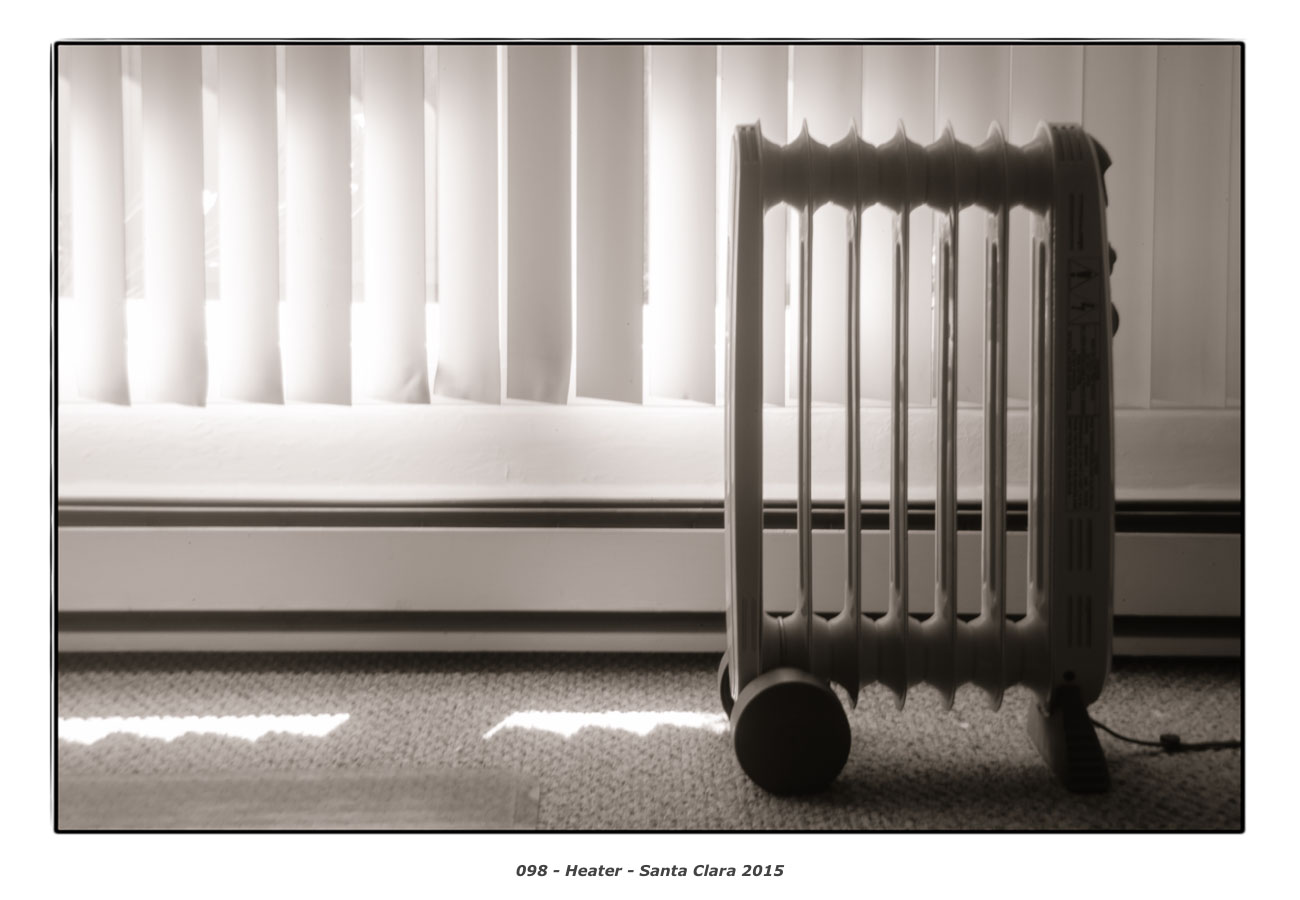
Leica M-P + Holga 60mm f/8 (Nikon F mount)


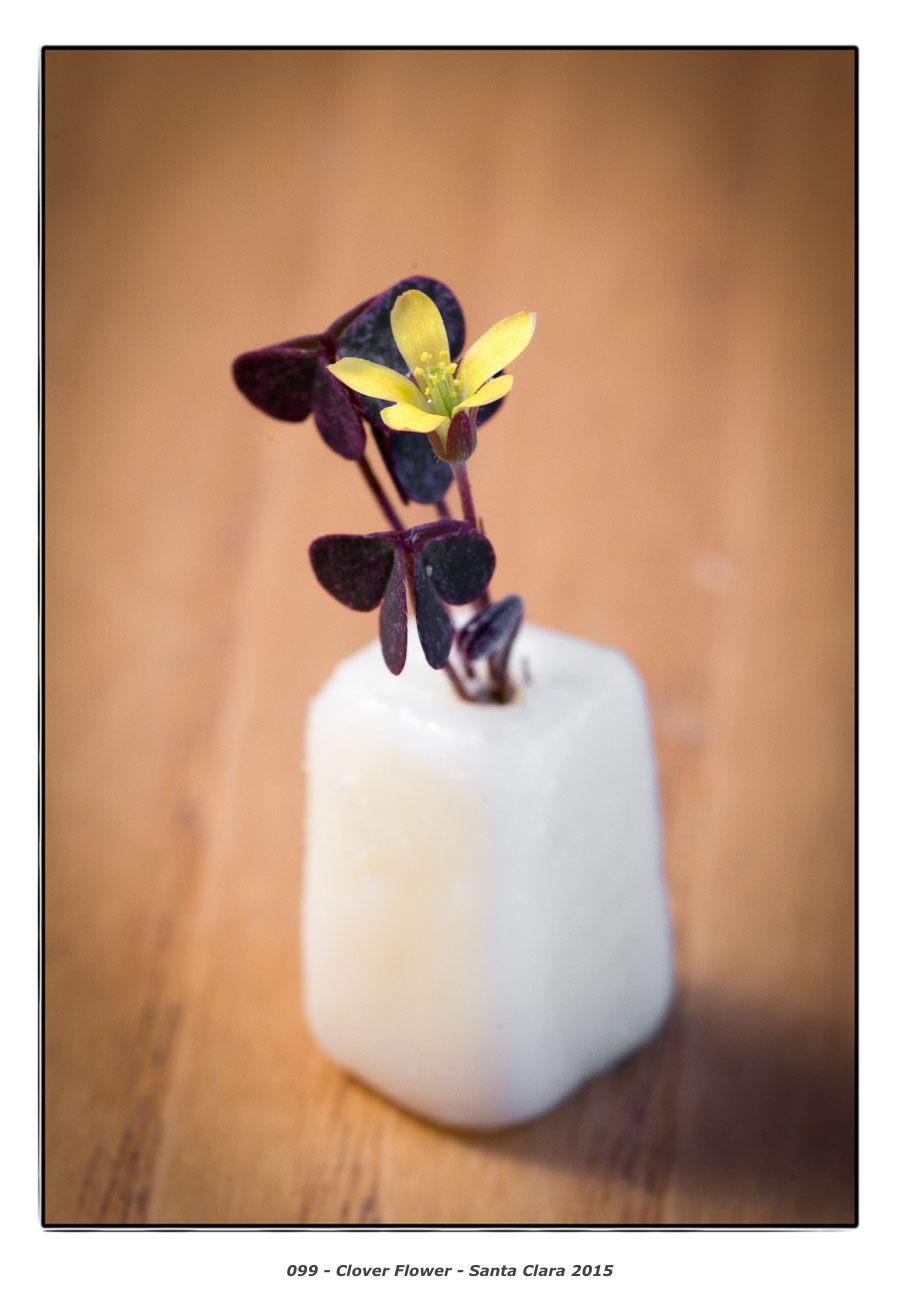
Leica M-P + Micro-Nikkor 105mm f/2.8 AI-S

The flower photo was fun ... the blossom as you see it there was less than 4mm across. The fancy flowerpot is a tiny block of cheese... 🙂

G
 
Back
Top Bottom