

You are using an out of date browser. It may not display this or other websites correctly.
You should upgrade or use an alternative browser.
You should upgrade or use an alternative browser.
Voigtlander Kontur Viewfinder
- Thread starter Will
- Start date
- Latest activity Latest activity:
- Replies 16
- Views 4K

Will
Well-known
V
varjag
Guest
The theory is that your brain will superimpose framelines with the image your other eye sees (so it is 1:1 finder).
Bought a 50mm one on ebay last week, will see how well it works 🙂
Bought a 50mm one on ebay last week, will see how well it works 🙂
Will
Well-known
varjag said:The theory is that your brain will superimpose framelines with the image your other eye sees (so it is 1:1 finder).
Bought a 50mm one on ebay last week, will see how well it works 🙂
yeah, you get dizzy after a while.. 🙂

vicmortelmans
Well-known
Can I come back on this discussion?
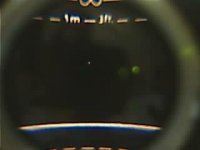
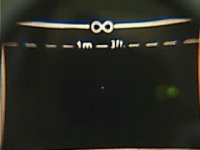
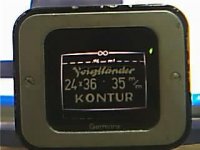
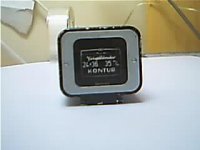
Does anybody have a clue how this really works? Looking at the outside, I see at the front a (very) concave lens and on the back a black surface with print on it in the middle. I imagine that this is a glass plate that you can view through at the borders, but not in the middle (because there's the print).
I saw another discussion where some guy showed how he removed the top-side of the viewfinder and got himself a waist level viewfinder (kind of---at least). So appearantly there are no other lens elements inside, than what you see up front.
I wonder how it's generating the framelines. Are they etched onto the inner side of the black back-plate (maybe right behind the Voightlander-label? Is the front element semi-reflective to reflect these framelines, creating virtual framelines at eye-focus distance?
Would it be feasible to create something similar at home? I've spared a number of lens elements from abandoned camera lenses, but if my assumptions on how it works are right, there are a number of tricky things:
- etching reflective framelines on a glass plate
- finding a concave lens that has the right inner curvature to reflect the framelines
- making the concave lens semi-reflective to (1) shine the light from outside onto the framelines and (2) reflect the framelines to the eye
Any suggestions are appreciated.
If someone can point me to further information on viewfinder optical design, please do so. There's very little on the web, actually I only ever found something useful by Rick Olesone here:
http://rick_oleson.tripod.com/looking_forward.htm
But he's also not very clear on e.g. the specific designs for reflected vs. projected framelines.
Groeten,
Vic
Does anybody have a clue how this really works? Looking at the outside, I see at the front a (very) concave lens and on the back a black surface with print on it in the middle. I imagine that this is a glass plate that you can view through at the borders, but not in the middle (because there's the print).
I saw another discussion where some guy showed how he removed the top-side of the viewfinder and got himself a waist level viewfinder (kind of---at least). So appearantly there are no other lens elements inside, than what you see up front.
I wonder how it's generating the framelines. Are they etched onto the inner side of the black back-plate (maybe right behind the Voightlander-label? Is the front element semi-reflective to reflect these framelines, creating virtual framelines at eye-focus distance?
Would it be feasible to create something similar at home? I've spared a number of lens elements from abandoned camera lenses, but if my assumptions on how it works are right, there are a number of tricky things:
- etching reflective framelines on a glass plate
- finding a concave lens that has the right inner curvature to reflect the framelines
- making the concave lens semi-reflective to (1) shine the light from outside onto the framelines and (2) reflect the framelines to the eye
Any suggestions are appreciated.
If someone can point me to further information on viewfinder optical design, please do so. There's very little on the web, actually I only ever found something useful by Rick Olesone here:
http://rick_oleson.tripod.com/looking_forward.htm
But he's also not very clear on e.g. the specific designs for reflected vs. projected framelines.
Groeten,
Vic
trittium
Well-known
You are supposed to keep both eyes open using this finder, Your brain will see the framelines in normal vision.
rxmd
May contain traces of nut
I would assume it's much simpler than that. The front element collects lots of light and projects it on the back plate. The plate is black, only the framelines are transparent. When you put it to one eye and close the other, the only thing you see is the framelines, because of all the light that comes from the front lens. When you open your eyes, the brain superimposes the framelines over the other eye's field of vision.vicmortelmans said:Does anybody have a clue how this really works? Looking at the outside, I see at the front a (very) concave lens and on the back a black surface with print on it in the middle. I imagine that this is a glass plate that you can view through at the borders, but not in the middle (because there's the print).
Doing that at home for various focal lengths would be a cool trick.
Philipp

winoto
Established
i can't live without my kontur finder. best even in low light conditions provided that you have 2 working eyes.
vicmortelmans
Well-known
rxmd said:I would assume it's much simpler than that. The front element collects lots of light and projects it on the back plate. The plate is black, only the framelines are transparent. When you put it to one eye and close the other, the only thing you see is the framelines, because of all the light that comes from the front lens. When you open your eyes, the brain superimposes the framelines over the other eye's field of vision.
I can't imagine that would work, because (1) the framelines would be much too close to the eye to focus properly and (2) how would it be able to frame? There's no relation of camera position to how the framelines map to the real world (which you can see through the other eye).
I think you can implement framing in two ways:
- either fix the position of the eye relative to the camera and provide a simple frame; that's how the old wireframe viewfinders work
- or use an optical system to create a virtual image of framelines; the virtual image has to be superimposed with the virtual image of the subject; that's how most viewfinders work today, but different techniques exist to create and superimpose the framelines...
My assumption is that there has to be some kind of optical system at work in the Kontur...
rxmd said:Doing that at home for various focal lengths would be a cool trick.
How did you guess? My jupiter 12 is in need of one, indeed.
Groeten,
Vic
clintock
Galleryless Gearhead
The Kontur is simply a black slide with frosted translucent framelines in it on the front, and a convex lens (loupe) for your eye to focus on it. It's just a little box with a slide and a magnifier, nothing magic.
The framelines wind up working in your head much the same way as they do in say the M3 or cv Bessa. In the mechanical rangefinder with framelines, the frame mask image is reflected onto a partially reflective prism so the image of the subject plus the image of the framelines are combined in the viewfinder.
The frameline mask window and viewfinder window looking in a parallel direction and being combined in the camera.
With the Kontur, the Viewfinder image is replaced with the image from one eye, the frameline by that of the other eye, and the combining prism is the brain. Then, like the components in the camera are parallel more or less so the frameline image and the subject image align correctly.
It's the same system really, just one is glass the other mushy grey stuff.
The framelines wind up working in your head much the same way as they do in say the M3 or cv Bessa. In the mechanical rangefinder with framelines, the frame mask image is reflected onto a partially reflective prism so the image of the subject plus the image of the framelines are combined in the viewfinder.
The frameline mask window and viewfinder window looking in a parallel direction and being combined in the camera.
With the Kontur, the Viewfinder image is replaced with the image from one eye, the frameline by that of the other eye, and the combining prism is the brain. Then, like the components in the camera are parallel more or less so the frameline image and the subject image align correctly.
It's the same system really, just one is glass the other mushy grey stuff.

Pablito
coco frío
It works but it takes some getting used to. Even if you have two working eyes, it can be hard to use if you favor one eye over the other. Maybe it works better if you have 20/20 in both eyes, but I could not use it reliably- took too much concentration. Also, a side note, the one I got was marked "35mm" but it was actually for a 50mm lens in 35mm format.
vicmortelmans
Well-known
OOOPS!
I was imagining that you had to look into the black part with the print and that the lens would be the front of the viewfinder... No wonder it puzzled me. Probably misguided by that guy how made a waist level finder out of it: he had it mounted the other way around.
Now it makes perfectly sense.
So then it should indeed be a convex () lens rather than a concave )( lens in front, I assume: it works like a magnifying glass.
Clintock, Thanks for the enlightening!
Groeten,
Vic
I was imagining that you had to look into the black part with the print and that the lens would be the front of the viewfinder... No wonder it puzzled me. Probably misguided by that guy how made a waist level finder out of it: he had it mounted the other way around.
Now it makes perfectly sense.
So then it should indeed be a convex () lens rather than a concave )( lens in front, I assume: it works like a magnifying glass.
Clintock, Thanks for the enlightening!
Groeten,
Vic
vicmortelmans
Well-known
OK, so what about this design:
The [ ] are etched framelines in a black slide (just like the Kontur's), but this time mounted on top of the viewfinder (catching lots of light, that's good). The eye (left side) looks through a magnifying glass into the viewfinder. There's a prism inside that reflects the framelines at a 90 degree angle, but because the prism is semi-transparant, it will also transmit what's in front of the viewfinder. Because of the magnifying glass, the eye is focused close-by, so we'll have to bring the real world closer to the viewfinder by putting a concave lens in front of it...
I guess this is more or less the same mechanism of framelines as in my Canonet QL17 and many other RF's, right? It seems like a good concept for auxiliary viewfinder as well, but I never encountered it. Maybe there's something about it that is not feasible?
Groeten,
Vic
Code:
  [  ]
^      v
| +--- |
| |  / |
| | /  |
| |/   |
v      ^
The [ ] are etched framelines in a black slide (just like the Kontur's), but this time mounted on top of the viewfinder (catching lots of light, that's good). The eye (left side) looks through a magnifying glass into the viewfinder. There's a prism inside that reflects the framelines at a 90 degree angle, but because the prism is semi-transparant, it will also transmit what's in front of the viewfinder. Because of the magnifying glass, the eye is focused close-by, so we'll have to bring the real world closer to the viewfinder by putting a concave lens in front of it...
I guess this is more or less the same mechanism of framelines as in my Canonet QL17 and many other RF's, right? It seems like a good concept for auxiliary viewfinder as well, but I never encountered it. Maybe there's something about it that is not feasible?
Groeten,
Vic
vicmortelmans
Well-known
Continuing my persuit of viewfinder design specs, I bumped into this (German) site, which gives an overview of the technical evolution of Voightlander viewfinders.
Very comprehensive!
http://home.wtnet.de/~ddrescher/hobbys/voigtlaender/sucher.html
Groeten,
Vic
Very comprehensive!
http://home.wtnet.de/~ddrescher/hobbys/voigtlaender/sucher.html
Groeten,
Vic
vicmortelmans
Well-known
I was just thinking on another variation to this design: the Kontur Viewfinder with internal light source. It would allow to see the framelines even in low light situations. I didn't use the Kontur yet, but I can imagine that the framelines get pretty dark in low available light situration.
A small attachment to the front, containing a battery, a led, a switch and a diffuser screen should be sufficient.
Groeten,
Vic
A small attachment to the front, containing a battery, a led, a switch and a diffuser screen should be sufficient.
Groeten,
Vic
V
varjag
Guest
I've been using Kontur for a while now, and found it damn handy. It rides in the shoe every time I use a 50.
You do not need illumination, because the lines are very bright when it's dark, even when it's nearly pitch black, that's in part why I love it. Have no troubles composing with it in situations when nothing can be seen through the Contax viewfinder.
You do not need illumination, because the lines are very bright when it's dark, even when it's nearly pitch black, that's in part why I love it. Have no troubles composing with it in situations when nothing can be seen through the Contax viewfinder.
vicmortelmans
Well-known
Hi,
I've been busy creating a prototype Kontur viewfinder. Find more info here:
http://users.telenet.be/vicmortelmans/tmp/kontur/kontur.html
Main conclusion is that the design has some limitations that make it hard to extend for wider field of view. So I fear that my 35mm Kontur will remain a dream for some while...
Groeten,
Vic
I've been busy creating a prototype Kontur viewfinder. Find more info here:
http://users.telenet.be/vicmortelmans/tmp/kontur/kontur.html
Main conclusion is that the design has some limitations that make it hard to extend for wider field of view. So I fear that my 35mm Kontur will remain a dream for some while...
Groeten,
Vic
Similar threads

- Replies
- 2
- Views
- 535

- Replies
- 11
- Views
- 1K

- Replies
- 20
- Views
- 567
- Replies
- 4
- Views
- 296
- Replies
- 13
- Views
- 612
