Metering pointers

James1314

Member
Local time
7:35 PM
Joined
Aug 29, 2013
Messages
11
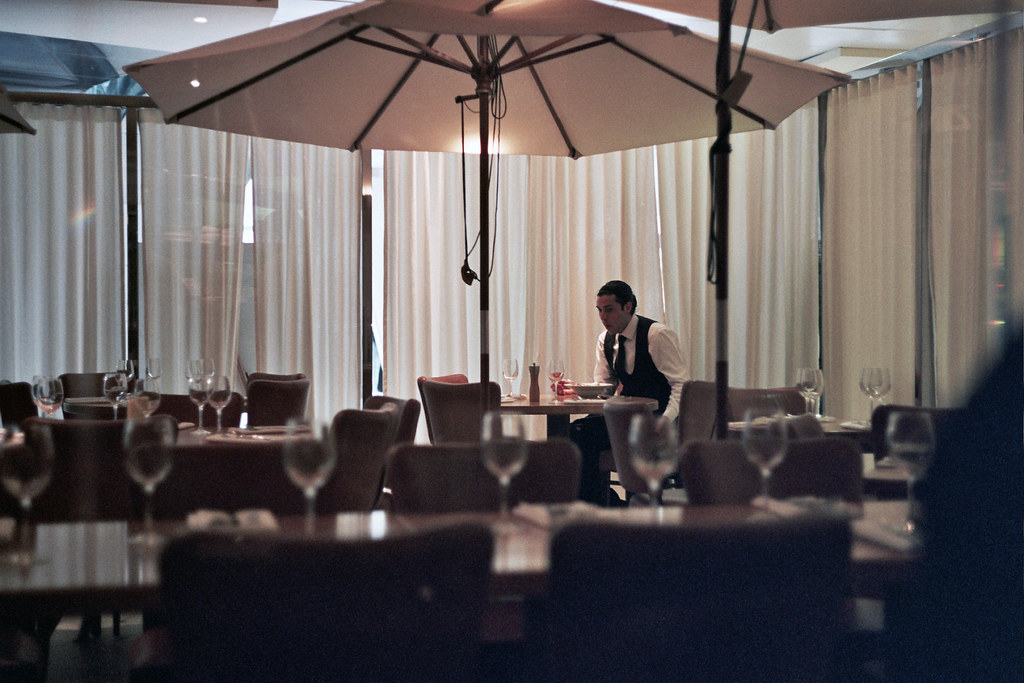
Hi all, I was hoping you could give me some metering pointers, I've really been struggling with photography recently, and its in getting what I see in a scene to translate into a final image, partly composition and partly in exposure. So, last night I came across this image and hoped you could tell me, how would you meter for this scene?

Untitled by Peter Wieczorek, on Flickr

I end up shooting in twilight/ dark a lot given England's god-awful weather/ seasons and the contrast between the shadowy greys, blacks and white is something I struggle to control - or is a lot of this controlling black level in post processing? Thanks for any help!
 
I would have probably exposed it about the same as you have done - unless there is some interesting detail in those shadows that needs to be seen.

Is it so much that you're not sure how to meter what you see when taking pictures as it is that you've just not got a feel what the photograph will look like once printed?
 
nice picture James!
lately I am trying to be preprepared while I am in differently lighted environments.
As I am using a ZI ZM + 35/2 + HP5@400, in an environment like this I would have pre selected 1/30 f2,8... and see how it will go...

Furthermore, according to my previous setting with an canon EOS 3 (Av mode + center weighted metering) I would have asked the camera for about an f stop underexposure (as there are some small light areas in the frame)...

Keep up the good work!
 
nice picture James!
lately I am trying to be preprepared while I am in differently lighted environments.
As I am using a ZI ZM + 35/2 + HP5@400, in an environment like this I would have pre selected 1/30 f2,8... and see how it will go...

Furthermore, according to my previous setting with an canon EOS 3 (Av mode + center weighted metering) I would have asked the camera for about an f stop underexposure (as there are some small light areas in the frame)...

Keep up the good work!

... what he said, if you are working handheld this is my method ... then, if I feel I've been in a particularly dark environment I may push it a stop or two when developing.

The reasoning is simply that 1/30 and f2.8 is the limit of what you can keep still and correctly focus, and whatever the meter reads you'er not going to overexpose in those conditions

PS ... obviously if one has time to find a rest or support for the camera and take a meter reading then it's probably more accurate ... in my case I've lost the little attachment that allows a reflective meter reading so I'd probably still be guessing
 
I see what you mean in this photo by someone else. The implication of the two previous posts is that you don't really meter at all, if you have the vast experience of the respondents here. Stewart's approach seems reckless and arbitrary to the beginner but the principle here is that metering that scene is damn tricky and choosing the reading by which you might set the camera is even more arbitrary and your experience of the light in that sort of interior and your previous results on film or digital, or the tabulation in a Kodak available light photography guide from the 1950s, will be much more successful in getting the pucture than an expensive light meter for this scene.
 
....So, last night I came across this image and hoped you could tell me, how would you meter for this scene?
It depends on what's important to me (highlights or shadows in the Flickr sample you reproduced) and how I want to render it. For digital capture some modern sensors might be able to record the full dynamic range (DR) of this scene. Therefore expose using a histogram to ensure highlights aren't clipped. For film capture, if the DR of the scene is greater than the DR of the film, follow the advice above.

I end up shooting in twilight/ dark a lot given England's god-awful weather/ seasons and the contrast between the shadowy greys, blacks and white is something I struggle to control - or is a lot of this controlling black level in post processing? Thanks for any help!
If the digital example I gave above applies here, then yes, you can control it in post.
 
Sorry guys! Just to clarify, as I mentioned this isnt my photo, [I wish it was] but I just came across it while perusing flickr! I wouldnt want to take credit for someone else's work.
 
After reading your replies - and thanks for the advice, my chosen medium is film rather than digital, which I'll scan onto my laptop, any to be honest probably the most difficult way to learn, but I felt the photo demonstrated the kind of end result I've hoped to achieve in the past but fallen short of.
I feel tunalegs touched on part of my issue with not having a firm feel for what the final image will look like after the exposure has been made, maybe partly using analogue and partly using a rangefinder so my depth of field is based on what I 'think' it will look like. I'd say I can reasonably hand hold to a 1/15th through practise with a 5cm lens [not that I use anything else].
I'd really like to know exactly what Richard G was getting at but I feel slightly lost by his post - are you trying to get at the idea of pure practise built on a firm knowledge of the concepts and limitations involved in photographing such scenes?

Edit - as an addition this is my own work and may show some of the problems I've mentioned
https://www.flickr.com/photos/87357235@N08/
 
... what do you think of these

16323547097_db4b74d431_b.jpg


16508437592_a95ce4bbdf_b.jpg


hope you don't mind the use of the files
 
... these would all have been taken at f2.8 and 1/30 ... if I could hold it still at 1/15 I'd use that, but age has taken it's toll and at some point I'll need to go to 1/60

The idea is to get as much information as I can on the neg, but there's no point going faster than f2.8 due to poor DOF and 1/30 sec as thats as slow as I can hold, and motion blur becomes possible is one goes slower anyway ... with negative film you are unlikely to overexpose it, so I get as much data on the film as I can then sort it out in photoshop, these are 'draft' scans if I were printing them I'd be spending a lot more time in photoshop

3515264707_048404f75d_b.jpg


2302098502_f402e55bb4_b.jpg


2302103000_dc098d23a8_b.jpg


2810980522_e7e276b7ab_b.jpg
 
Jamie what I was getting at is that metering is not always the best way to determine exposure. Stewart is giving a good tutorial on the practical flexibility of exposing film in particular. In many situations just choose the setting that you have to have. Somethings can't be usefully metered. That's why I mentioned a published exposure guide. A floodlit statue at night is better exposed according to either experience or a table rather than a meter reading. With your original scene the average meter will average and you'll get a black cavern and an overexposed figure on the escalator. You'd need a spot meter to take a reading there, but then if you followed that the final picture would be too dark! Meters can't think. Years ago film boxes had an extremely brief pictorial exposure guide inside the box end. That often gave better exposures than an expensive meter.
 
yep ... that's it, for instance using a metre on a sunny day is asking for trouble, a metre will give one lots of different settings depending on what its pointed at, while the light itself remains the same, obviously ..

Sunny f16 1/film-speed is way more accurate, well, as long as one takes account of backlight subjects
 
Thank you Richard & Stewart, that actually has highlighted to me a lot of what I've been doing wrong and it does make sense now, especially about spot metering particular subjects resulting in underexposed images, I had a look for a kodak book on the topic last night but being in England 99% of the copies are in America, I did however come across this, which the final page has an exposure table that I think could prove extremely useful.
http://www.kodak.com/cluster/global/en/consumer/products/techInfo/ac61/ac61.pdf

You've both given me quite a bit to consider, originally i did use a sliding exposure chart based off of sunny ƒ16 which performed extremely admirably and since using om-1/4 with meters and trusting those more than [my own] ability, when I moved onto LTM/ rangefinder and implicitly trusting a [iphone] metering application over anything else I had to hand hasnt been helpful, but this has give me a lot to think about. Thanks!
 
Stewart you've also made me think about that - I've always considered that the negative should be as close as possible to the final image as possible, rather than a means by which to obtain as much information as possible, so that in making the final image some could be excluded [funny wording here] to produce the final image that I desire.
 
Hi,

What I did years ago and still do now and then is bracket the shots after getting a starting point from the meter. And make a note of the sequence and metering for comparing with the result and learning. You soon get to know what will work and what won't...

BTW, the notebook is most important. It's easy to forget.

Regards, David
 
Stewart you've also made me think about that - I've always considered that the negative should be as close as possible to the final image as possible, rather than a means by which to obtain as much information as possible, so that in making the final image some could be excluded [funny wording here] to produce the final image that I desire.

There isn't enough time to do it all in the camera (I know people claim otherwise) the trick is to get more than one needs on the film, then later on one can decide which highlights to blow or shadows to block and crop it back to one's personal aesthetic vision (yes I know cropping and post processing is the work of the devil ... but it works)

Making the negative and making the print are two different things whatever the fundamentalists think
 
I'm lucky enough to have a Gossen Starlite which will do reflective and incident readings and has a 1 and 5 degree spot option. I would either have chosen what I regard as a mid-grey and used the single spot option for the reading or, more likely, used the multi-spot option for the brightest and darkest points and - assuming they were within 7 or so stops of one another - used the average. I also tend to rate film at half box speed as I've found that film tends to respond better to a bit of over-exposure rather than risk being "under". I'm not saying I'm right, BTW, I'm just telling you what I'd do.
 
Metering pointers

My manual says that in evaluative metering, "AE lock is applied at the AF point that achieved focus." I think Im confused by evaluative metering and AE lock being used in the same sentence. If evaluative metering is just an average for the whole scene, then is a narrower point of AE really taking place when the focus is chosen? Say in a portrait with some back light or strong light coming in from the side...I choose to focus on the face and therefore lock auto exposure on the face as well...is priority given to the exposure on the face or is everything averaged as I would expect in evaluative and the face may come out too dark? I wonder if using center-weighted or partial for portraits would be better, and using the AE lock button when placing the center point over the face and then focusing with the appropriate focus point. Any pointers, ideas, suggestions? Thanks
 
Expanding on what Paul said, I would spot meter one of the muted areas on the vertical barrier under the handrail, and take that as neutral grey. Which may be what was done here.

OR, just follow the previous suggestion of f/2.8 and 1/30 sec, which is also my go-to setting with 400 speed film in low light. Generally gives a usable result. I honestly don't know what else you can in difficult situations. If it is a great image and you have time, the spot meter is indeed the weapon of choice.

Randy
 
hey guys. some of these tips are helpful. im on my fourth roll of film and i struggle with the shutter speed. using the sunny 16 rule im ok at judging shadows. once indoors i find it very hard.

yesterday i met with a friend in central london after london fashion week and we went to get some coffee in pret. it was evening time and i saw a shot of a guy in the front of the store lit by some dwn light. my camera which is a fuji stx-2 read 1.9 at 1/30th using kentmere at iso400. i was exposing to his reflection in the mirror. this shot took me much longer than i wanted to take. i find getting expose on film is hindering my vision for shots.

i was thinking of getting a light meter to help. i normally adjust the aperture when i see a change in shadows. once inside i find it very hard.
 
Back
Top Bottom