Hi Bill,
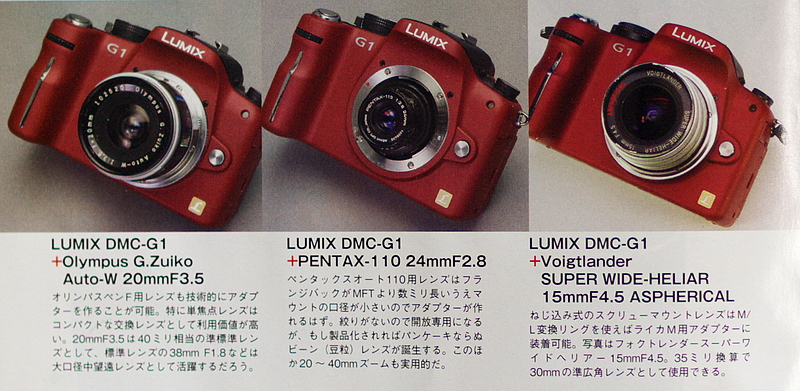
Like the earlier 4/3 cameras, Micro 4/3 adapted lenses will have infinity focus and stop down manual aperture control. For the newbies, that means the smaller the aperture the darker the focusing screen, and the harder it will be to focus. Focal length of course will not change, but with the smaller format, a 35mm Leica lens will give roughly 1/2 the 35mm film format field of view on a Micro 4/3 camera. So an adapted 50/1.4 Leica M lens would have the field of view of a 100/1.4 on the Micro 4/3 body. Which lenses can you adapt? Probably 99% of them will mount on the adapter, but of course there will be some exceptions.
Most (but perhaps not all) 4/3 and Micro 4/3 bodies mounting adapted lenses will have TTL metering in manual match LED or Aperture priority modes, as well as TTL flash at shooting aperture using basic center weighted metering. Spot metering and matrix metering will seldom be available via adapted lenses.
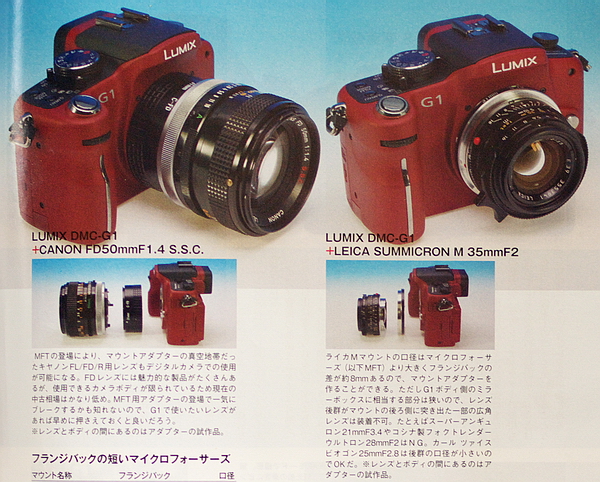
The interesting thing to me is that the Micro 4/3 body via adapters will allow SLR focusing for the FIRST TIME on a digital body (WITHOUT glass in the adapter that would degrade the images) for Leica M, Canon FL/FD, and Olympus Pen F lenses! To me, this is a real big deal.
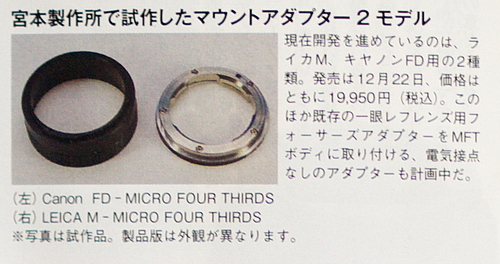
Initially I will have Leica M and Canon FL/FD adapters in late January. $175 + shipping. Over time most other popular SLR lenses will likely be added, if sales justify it. Carrying a film Leica M rangefinder and a digital Micro 4/3 camera in the same bag, using the same lenses strikes me as a very attractive way to go.
I understand 4/3 camera manufacturers are making a 4/3 lens to Micro 4/3 body adapter. That means you can add your 4/3 adapter (say Nikon SLR) to your 4/3 to Micro 4/3 adapter, and mount it on your Micro 4/3 camera. OF course having two adapters stacked will be a bit bigger and heavier than using a single adapter to your Micro 4/3 camera.
Stephen