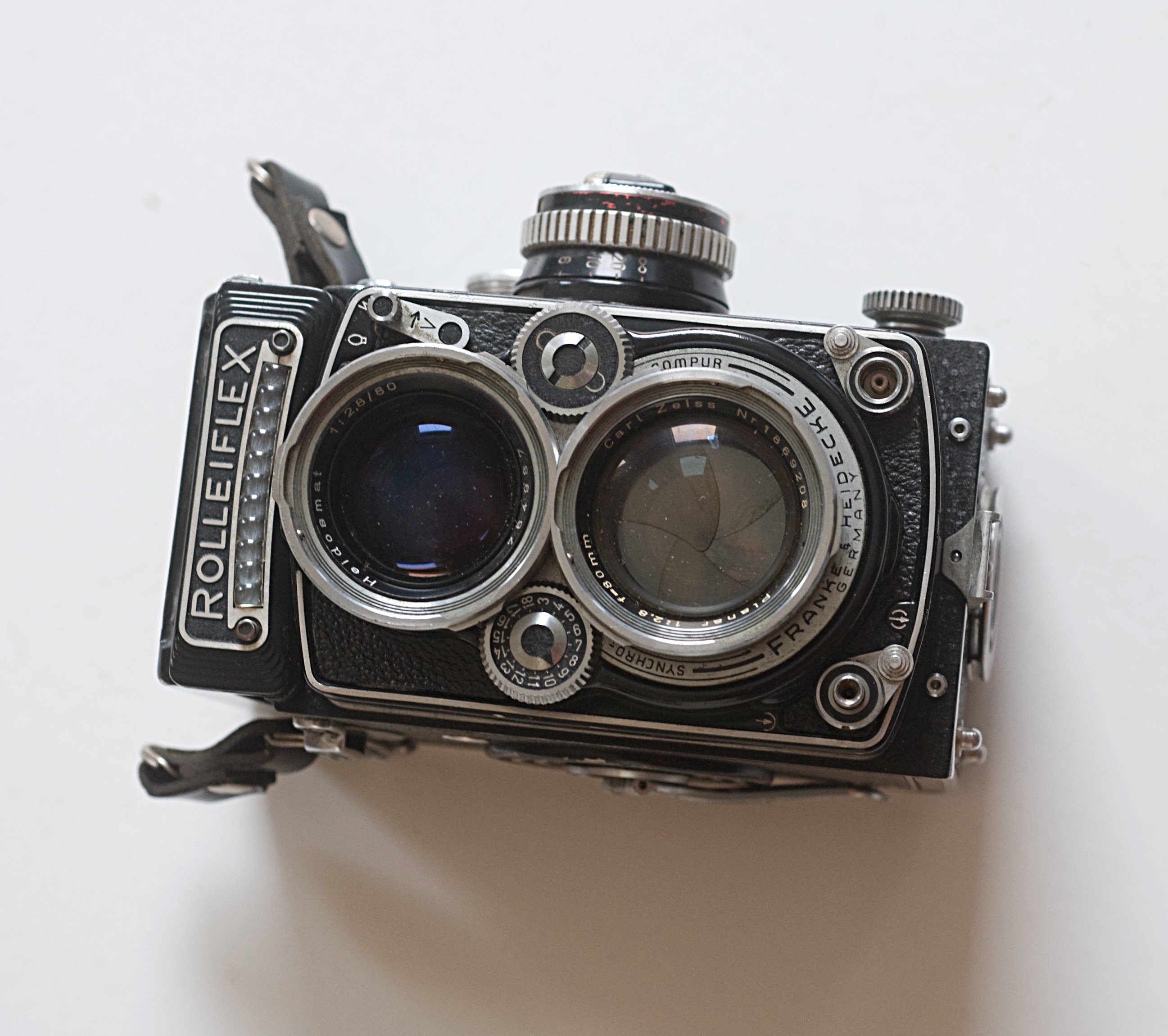
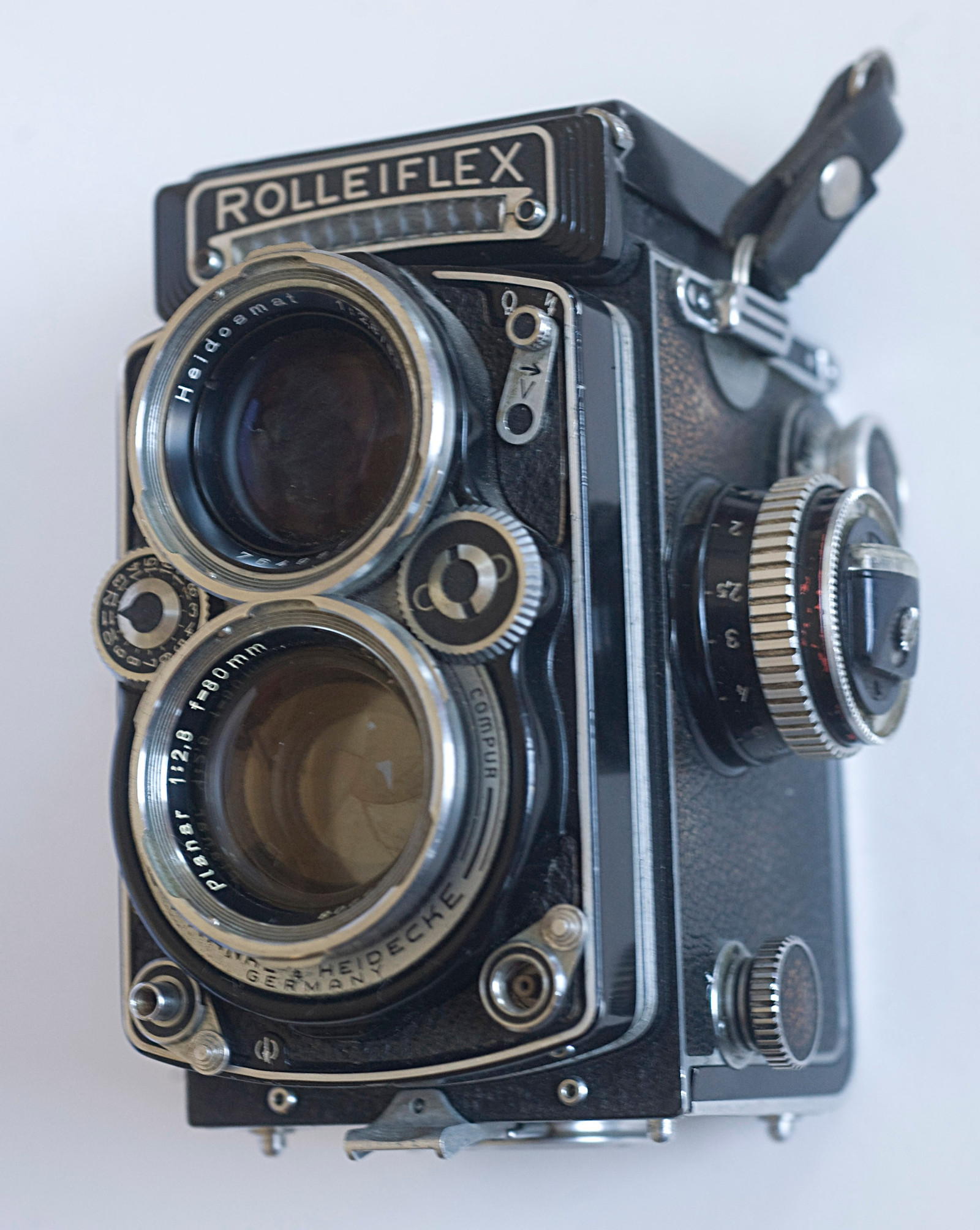
I had several Rolleiflex TLRs over many years of use, from my first one (a 1947 model that belonged to my grandfather) to the 2.8E you're looking at, and including a couple of MX and MX-EVS models from the mid-1950s and a late series 3.5F Whiteface from around 1970. All lovely cameras, but honestly the f/3.5 lens models, whether with Tessar or Schneider lens, were more appealing to me than the f/2.8 models due to the additional weight of the faster lens models. My last was a superb MX with Tessar f/3.5 that I'd had completely overhauled by Harry Fleenor and then had Bill Maxwell fit a modern, top notch focusing screen in: just a great camera, light and easy to carry, fantastic focusing, etc. (A friend of mine in Japan continues to use that camera to this day.)
I would consider for any you purchase Rolleiflex today, if you want to put it into serious use, that you should automatically include in the purchase consideration a full service at Harry Fleenor's shop as a requirement.
Oceanside Camera Repair
Harry Fleenor
909 N Aviation Blvd.
Manhattan Beach CA 90266
USA
*(310) 374-6506
The last camera I had overhauled was a Rolleiflex 3.5F that I brokered a purchase from my old photojournalist friend Mike (it was his favorite camera for over 20 years) to my best buddy Linda (working as a staff photographer at the time) shortly before Mike passed away; he wanted the camera to go to someone who would love it, and Linda loves it. The full service, including fixing an intermittent jamming problem, was a $550 expense that I was happy to pay for, to honor Mike and help Linda out. It takes experience and a bunch of special tools and jigs to properly service a Rolleiflex TLR—more have been ruined by untrained hobbyists diving in themselves than have been saved. The service was worth every penny: the old beast was like a new camera all over again when I got it back.
🙂
I personally moved to Hasselblad 500 cameras when I sold my last MX to my buddy in Japan. I'd always wanted a Superwide and found a mint 903SWC that I traded off my entire Leica M kit to afford, and then picked up a 500CM Apollo Commemorative set (1979 vintage) which I adored. In 2004, I sold both to friends of mine (who still use them) because I needed to move that cash into my then-startup photo business and digital gear. But I missed both quite a lot over the ensuing decade and bought back in during 2013, with first another SWC and then a pair of 500CMs and a few lenses. The Hasselblad 500CM suits me well, the lenses are terrific, but both the 500CM and SWC sat on the shelf for too much of the next six-seven years because my photo workflow had become too much in the digital idiom to go back to use of film as primary.
The result of this was that I considered selling all of the gear off and putting the money into more Leica gear, but something held me back. Then I heard of the 907x Special Edition and, within a couple of days, put in an order for one and sold the SWC to help fund it. The 907x/CFVII 50c Special Edition kit arrived just before the coronavirus dance hit its full swing, thankfully, so I've enjoyed six months of using it already. But that's another story, the sum up is that the new digital back has revitalized my use of the 500CM and I'm so glad that I didn't sell the kit off.
The Hasselblad 500CM and other 500 series cameras are every bit the joy to me that the Rolleiflex TLRs were for long, and more so because they are more flexible and modular. Fitted with waist level finder and A12 back, they aren't much more bulky or heavier than the Rolleiflex are, they focus closer, and of course with interchangeable lenses and film backs, finders, they are more versatile. With a little time and practice in use, they can be hand-held down to almost the same exposure times as the Rolleiflex (using mirror lockup as part of your shooting workflow) but they are actually a nicer camera to use on a tripod, to me. The lenses are all really good (some better than others of course) to the point where it hardly matters which ones you use: You will get excellent results with all. There's some learning curve involved, just like with the Rolleiflex, but it's well worth it.
And I would also consider a CLA to be a good idea for any older Hasselblad purchase as well. Just like the Rolleiflex, they are high precision, complex mechanical devices that need lubrication and proper adjustment to spec for best performance. I've had about half of my V system equipment serviced as time has gone on, and the other half will get serviced over the coming year.
I've always worked with the Hasselblads without abusing them or rushing things. As a result, I've never had anything jam or fail in use. A couple of my old lenses from the 1960s and early 1970s need some work (stuck self timers) so they'll go off to David Odess for an overhaul soon.
David S. Odess
141 Memorial Parkway #230
Randolph MA 02368
USA
(781) 963-1166
I hope my short history of Rolleiflex and Hasselblad ownership helps the OP make decisions about what to consider. All of these cameras are top notch performers and worthy of putting some money and time into. Some you will find more suitable
for you than others.
G