Rolleiflex 2.8 question (purchase, maybe)

Peter_S

Peter_S
Local time
3:08 AM
Joined
Jan 24, 2010
Messages
886
Location
Trondheim (Norway); Tbilisi (Georgia)
Hi,
I am looking into potentially buying a Rolleiflex for the odd portrait work.
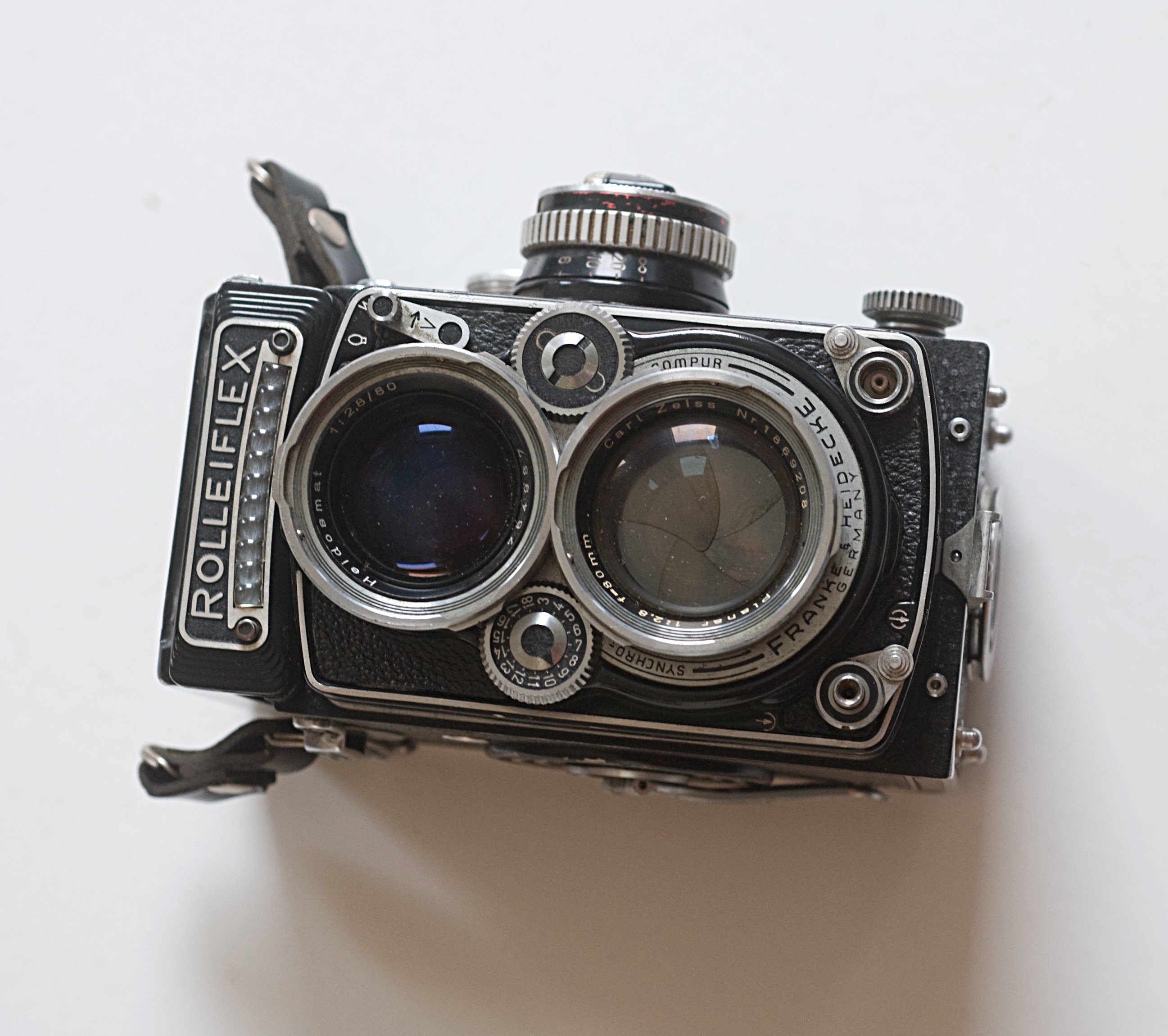
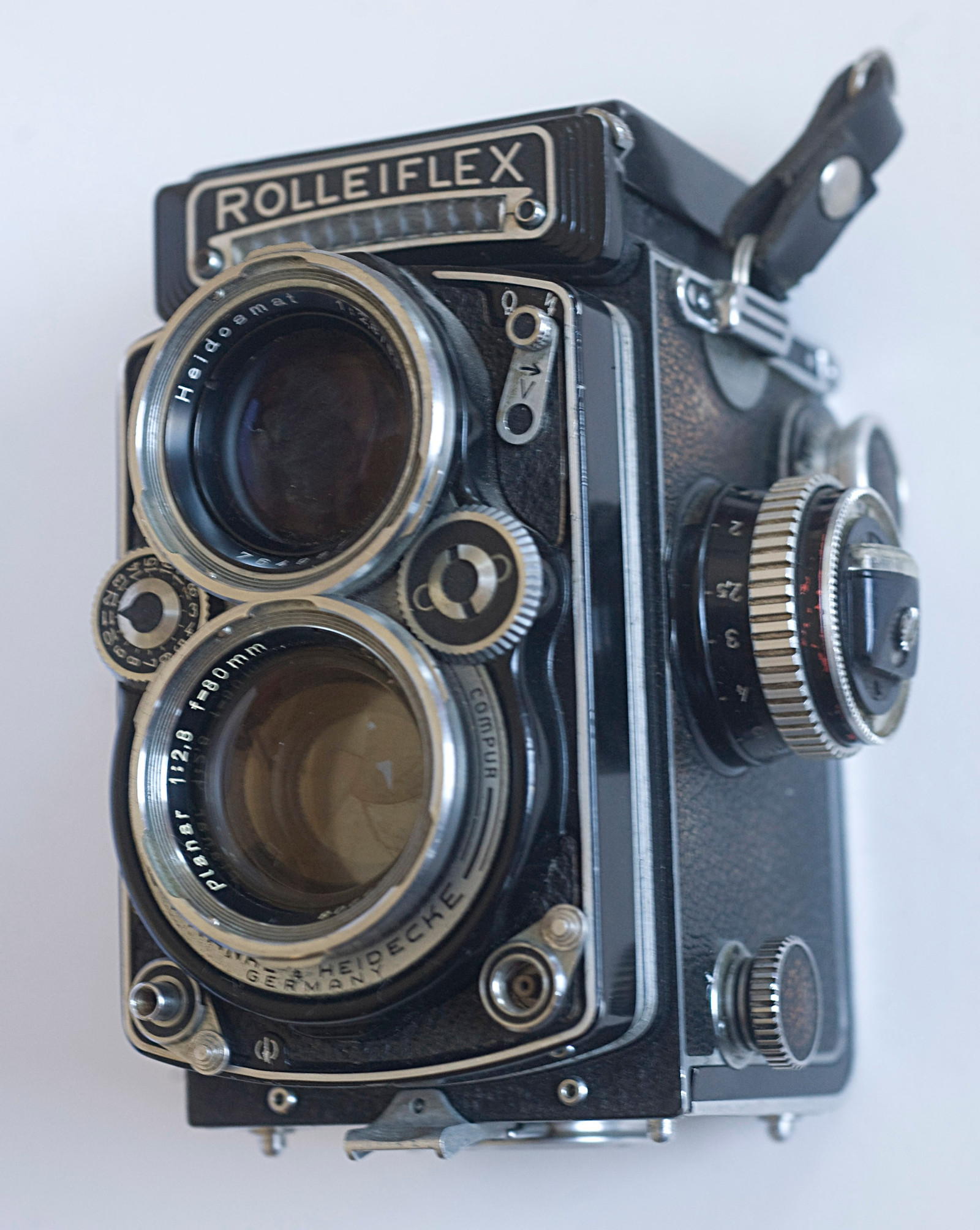
Here is one I came across.
Can someone elighten me which model this is? My limited knowledge tells me a 2.8E. What should I look out for when buying? Shutter time are, according to the seller, "OK". He does not provide much more information.

How hard is self-servicing on these? I had a 3.5 one a few years back. Did not suit my shooting style, but now I can see myself using one. Alternative is 500 c/m Hasselblad.

85bdfbe6-963e-4fc4-a989-3381727b748a.jpg


800_1647951612.jpg
 
Yes, 2.8E. If the meter is working and accurate, that's a bonus -- don't make that the deciding factor, but I would certainly say a camera with a working meter is worth more than one with a dead meter, all other things being equal.

Yes, the shutter speeds should be accurate(ish). Also, you will want to look at the taking lens to see whether there is any decementing of the lens elements. (There's a rather recent thread on RFF about this -- the 2.8s are more prone to it than the 3.5 Rolleis. Not necessarily fatal -- the camera may take perfectly fine pictures -- use a lens hood though. And decementing is definitely grounds for a price reduction.)

If you get the camera, invest in a hood and a Rolleinar 1 for portraits.
 
Hi Peter, I was in a similar situation a while ago, trying to decide between the Rolleiflex 2.8 and a Hasselblad 500C/M. Much to my wife's chagrin I ended up with both. Being an SLR shooter, I struggled with the "viewing from the top down, everything reversed" framing and focusing with both camera systems, until I found a 45º Prism finder for the Hassy. After that, when doing portrait work I never used the Rolleiflex again and ended up selling it. I also liked having interchangeable backs for the Hassy so I could shoot color and B&W at the same time. But I admit the Rolleiflex is probably a more romantic camera.

Good luck with whichever you choose.

Best,
-Tim
 
the rolleiflex will need a cla so factor that in. if you read previous postings you will see the problems basically ever planar, especially earlier ones, will have at some point so either live with them or buy one absolutely mint for $2k+ (buy a gx)

this generation 2.8 tends to flare and highlights can glow heavily if there is haze or scratches on the planar and the xenotar coatings are far better at preventing them. later planars in the 3.5f and 2.8 gx models have the best coatings and basically zero issues.

if you want 2.8 go schneider imo.
 
Another vital check: the front unit moves parallel to the camera body and retracts until fully flush with the body. If it is not aligned, the focus will be off.....trust me! If the meter is not coupled, it is an "e." Greatest camera ever alongside the Leica
 
Another vital check: the front unit moves parallel to the camera body and retracts until fully flush with the body. If it is not aligned, the focus will be off.....trust me! If the meter is not coupled, it is an "e." Greatest camera ever alongside the Leica

it doesnt have to be flush just equal on top and bottom. over time the lens plate bends inwards from depressing the shutter button (or for other reasons it is bent, these are 70 year old cameras) and a tech can fix this and if it's been re-aligned the lens plate wont always be flush with the body but the silver plate between them should be showing equally on top and bottom

they are almost ALWAYS bent if it wasnt kept by one owner and babied. they can be realigned, but ask for pictures of each side straight on with the lens focused to infinity (retracted fully into the body)
 
good idea. the 3.5 is my choice as well. T's and Rolleicords are usually in much better shape because they weren't studio workhorses, and both of those lenses are gorgeous. with a +1 diopter you can achieve very shallow dof, and as they have a soft falloff are ideal for portraiture. late model T's have updated coatings, and can appear a lot sharper because of better highlight control. Kohs cameras on ebay has several 3.5s fully serviced. they aren't cosmetically perfect, the lenses usually have some scratches but are aligned by koh who was a rollei certified tech.

the 500cm is wonderful ergonomically as well, but the rolleis overall have achieved sharper results for me cause there isn't a mirror. if that's your thing. the hassy fits a lot better in the hand with a prism and have less technical problems that need to be addressed out of the gate; many rolleis can turn into expensive projects because they are complex
 
Yes, it's an E from the late 1950s. Looks (reasonably) okay cosmetically, mechanically who knows?

Many Es were used by studios and flogged to death, doing everything from portraits to commercial assignments to copying customers's snaps. They may look okay but are often badly worn and will often cost more than the original buying price for a professionally done CLA or repairs.

Home tinkering with a Rollei is akin to the silly man from the Victorian era who went down to the cellar to check on a gas leak, carrying a lit candle for lighting...

Rolleiflex Ts and Rolleicords were mostly owned by amateurs and used much less than the larger 'flexes, so are usually in better condition. For a long time they were far cheaper than their big brothers, but prices are now inflated for these as well. It all has to do with the quality of good German gear - nothing like these TLRs is being manufactured now and the cost of a 50-60 year old shooter in good condition can be as high as that of a quality new DSLR.

I (and most other TLR users I know) will never, ever buy a Rollei from an Ebay seller - kitchen table Dinky Toy repairs to the shutters or the focusing system are usually disastrous and often do more damage than good, the inevitable final bill from a qualified professional repair center will then usually cost more than the camera did. Buy your Rollei instead from a reputable camera retail shop and get a reasonable warranty on it - the price may be higher (surprisingly often not much more expensive, given the ridiculously inflated prices most Ebay sellers ask for these wonderful German shooters) but you won't regret paying it.
 
Last edited:
I have had both 2.8 and 3.5 Rolleis. I sold the 2.8. Still have two f/3.5 Rolleiflex. The extra half stop didn't turn out to be very important except maybe as a status symbol. But who notices Rollei status?
Suggest you look for one with no meter. By now most of these are suspect anyway.

It may be heresy but I have and like two Yashicamats [NOT the 'G' version]. In many ways I prefer these to my Rollleiflex'. Image quality is excellent. I spotted the second almost new looking one locally for 1/8th the cost of really nice Rollei. These are less likely to have been flogged to death by a working pro.

Whatever you buy, don't forget the old adage "It was expensive because it was so cheap". Wait for a good copy of whatever you choose to buy and maybe pay a bit extra up front. Rollei repairs are very expensive.
 
The 2.8E is a fine camera. As long as the taking lens is clean with no separation, little or no scratches it’ll be fine. Spend $50 on a Mamiya RB67 screen and bring camera for CLA and have the tech cut to size and install the Mamiya screen. You’ll have a camera good for another 20 years for little money. $500 plus $50 for the screen and $150 for the CLA.
 
As with most things, buy the one in the best condition. Beware of corrosion of the aluminum body, and lens separation. Any signs of trauma (bent items) should have you steer away, as the two lenses are likely to be out of alignment. I have the 3.5F, 2.8F, and a Tele Rollei. Yet, if I use a TLR, the one that I use the most is a Minolta Autocord. That one is compact, light and it has a great lens.
 
I have the 3.5F, 2.8F, and a Tele Rollei. Yet, if I use a TLR, the one that I use the most is a Minolta Autocord. That one is compact, light and it has a great lens.

I have had both 2.8 and 3.5 Rolleis. I sold the 2.8. Still have two f/3.5 Rolleiflex. The extra half stop didn't turn out to be very important except maybe as a status symbol. But who notices Rollei status?

I sold the 2,8E, Tele and 2,8F, kept the 3,5F and 3,5B plus my pre-war Rolleiflexes. I had no need for the 2,8 lens and the Tele-Rollei.

The 3,5F with the six element Planar is razor sharp already at 5,6. The photos have an almost clinical modern look to them, which I like for colour, but not as much for black and white. For black and white I prefer the 3,5B with Tessar or one of the pre-war Rolleiflexes that also have the Tessar, but uncoated. The pre-war Rolleiflex Automat is lightweight and easy to carry.
 
Or go for a late model Zeiss Super Ikonta 532/16 with a coated Tessar lens.

Super Ikontas are fine cameras in their own right but limited in their uses. The rangefinders restrict them to mostly general shooting. They have an odd counter which cuts off at 11 so you lose the 12th shot on a 120 roll. The bellows are prone to pinholes or even tears as they age. The Compur shutters are easily serviced (by reputable professionals!) but the slow speeds are usually off and top speeds aren't particularly accurate. I've used several in my almost 60 years as a shooter, I like how they handle, an ideal one lens kit for light traveling, landscapes, environmental portraits - for formal studio portraits, no. If Zeiss had updated the last meter model after 1960 and if easily fitted replacement bellows were still available , there wouldn't be a nicer 6x6 camera to slip into a (big) pocket for walking in the bush or roaming the world.

But yes, the coated Tessar on the later model Ikontas is a superb lens, every bit as good as the Rollei Tessar.

As for the Rolleis, one 'flex that rarely gets a mention is the 3.5E2, a vastly underrated TLR which came out at about the time the Fs were being readied for the market. Possibly the E2 was the sale prototype for the F. Just over 6000 of them were made. There is a 2.8E2 but as other posters have rightly said, the small difference between 2.8 and 3.5 is mostly for vanity anyway. The lens is a Planar. A Xenotar may have been available but I've never seen one.

Mine dates to 1961 and still works fine after two CLAs but has a spot of lens separation. I use a lens hood and my negatives easily enlarge to ultra sharp 5x7s and 8x10s without signs of flare or whatever else separation supposedly does. I had the camera checked in 2002 or 2003 when the spot looked to be expanding. My repair person in Melbourne repair person told me it wasn't worth the cost to get it fixed. It reduces the value of the camera to show pony - as if I care.

I've owned this E2 since 1966. I bought many accessories (bayonet 2) when they were much cheaper than the blackmail prices most sellers ask for them now, so I have all the kit I need to keep shooting for a few more years until my time is done. My TLRs will then go to a friend as a gift from my estate.

Rolleis are a lifetime investment - the good ones keep going forever and a day and eventually become family heirlooms.
 
Last edited:
I had several Rolleiflex TLRs over many years of use, from my first one (a 1947 model that belonged to my grandfather) to the 2.8E you're looking at, and including a couple of MX and MX-EVS models from the mid-1950s and a late series 3.5F Whiteface from around 1970. All lovely cameras, but honestly the f/3.5 lens models, whether with Tessar or Schneider lens, were more appealing to me than the f/2.8 models due to the additional weight of the faster lens models. My last was a superb MX with Tessar f/3.5 that I'd had completely overhauled by Harry Fleenor and then had Bill Maxwell fit a modern, top notch focusing screen in: just a great camera, light and easy to carry, fantastic focusing, etc. (A friend of mine in Japan continues to use that camera to this day.)

I would consider for any you purchase Rolleiflex today, if you want to put it into serious use, that you should automatically include in the purchase consideration a full service at Harry Fleenor's shop as a requirement.

Oceanside Camera Repair
Harry Fleenor
909 N Aviation Blvd.
Manhattan Beach CA 90266
USA
*(310) 374-6506‬​

The last camera I had overhauled was a Rolleiflex 3.5F that I brokered a purchase from my old photojournalist friend Mike (it was his favorite camera for over 20 years) to my best buddy Linda (working as a staff photographer at the time) shortly before Mike passed away; he wanted the camera to go to someone who would love it, and Linda loves it. The full service, including fixing an intermittent jamming problem, was a $550 expense that I was happy to pay for, to honor Mike and help Linda out. It takes experience and a bunch of special tools and jigs to properly service a Rolleiflex TLR—more have been ruined by untrained hobbyists diving in themselves than have been saved. The service was worth every penny: the old beast was like a new camera all over again when I got it back. 🙂

I personally moved to Hasselblad 500 cameras when I sold my last MX to my buddy in Japan. I'd always wanted a Superwide and found a mint 903SWC that I traded off my entire Leica M kit to afford, and then picked up a 500CM Apollo Commemorative set (1979 vintage) which I adored. In 2004, I sold both to friends of mine (who still use them) because I needed to move that cash into my then-startup photo business and digital gear. But I missed both quite a lot over the ensuing decade and bought back in during 2013, with first another SWC and then a pair of 500CMs and a few lenses. The Hasselblad 500CM suits me well, the lenses are terrific, but both the 500CM and SWC sat on the shelf for too much of the next six-seven years because my photo workflow had become too much in the digital idiom to go back to use of film as primary.

The result of this was that I considered selling all of the gear off and putting the money into more Leica gear, but something held me back. Then I heard of the 907x Special Edition and, within a couple of days, put in an order for one and sold the SWC to help fund it. The 907x/CFVII 50c Special Edition kit arrived just before the coronavirus dance hit its full swing, thankfully, so I've enjoyed six months of using it already. But that's another story, the sum up is that the new digital back has revitalized my use of the 500CM and I'm so glad that I didn't sell the kit off.

The Hasselblad 500CM and other 500 series cameras are every bit the joy to me that the Rolleiflex TLRs were for long, and more so because they are more flexible and modular. Fitted with waist level finder and A12 back, they aren't much more bulky or heavier than the Rolleiflex are, they focus closer, and of course with interchangeable lenses and film backs, finders, they are more versatile. With a little time and practice in use, they can be hand-held down to almost the same exposure times as the Rolleiflex (using mirror lockup as part of your shooting workflow) but they are actually a nicer camera to use on a tripod, to me. The lenses are all really good (some better than others of course) to the point where it hardly matters which ones you use: You will get excellent results with all. There's some learning curve involved, just like with the Rolleiflex, but it's well worth it.

And I would also consider a CLA to be a good idea for any older Hasselblad purchase as well. Just like the Rolleiflex, they are high precision, complex mechanical devices that need lubrication and proper adjustment to spec for best performance. I've had about half of my V system equipment serviced as time has gone on, and the other half will get serviced over the coming year.

I've always worked with the Hasselblads without abusing them or rushing things. As a result, I've never had anything jam or fail in use. A couple of my old lenses from the 1960s and early 1970s need some work (stuck self timers) so they'll go off to David Odess for an overhaul soon.

David S. Odess
141 Memorial Parkway #230
Randolph MA 02368
USA
(781) 963-1166‬​

I hope my short history of Rolleiflex and Hasselblad ownership helps the OP make decisions about what to consider. All of these cameras are top notch performers and worthy of putting some money and time into. Some you will find more suitable for you than others.

G

 
I hope my short history of Rolleiflex and Hasselblad ownership helps the OP make decisions about what to consider. All of these cameras are top notch performers and worthy of putting some money and time into. Some you will find more suitable for you than others.

G

Hello Godfrey, and all others who have contributed!
So I came to the conclusion to wait for a well-kept Hasselblad. This requires waiting for funds to build up, but it`s dark now in Northern Norway anyway and I can wait until spring 🙂.
 
Back
Top Bottom