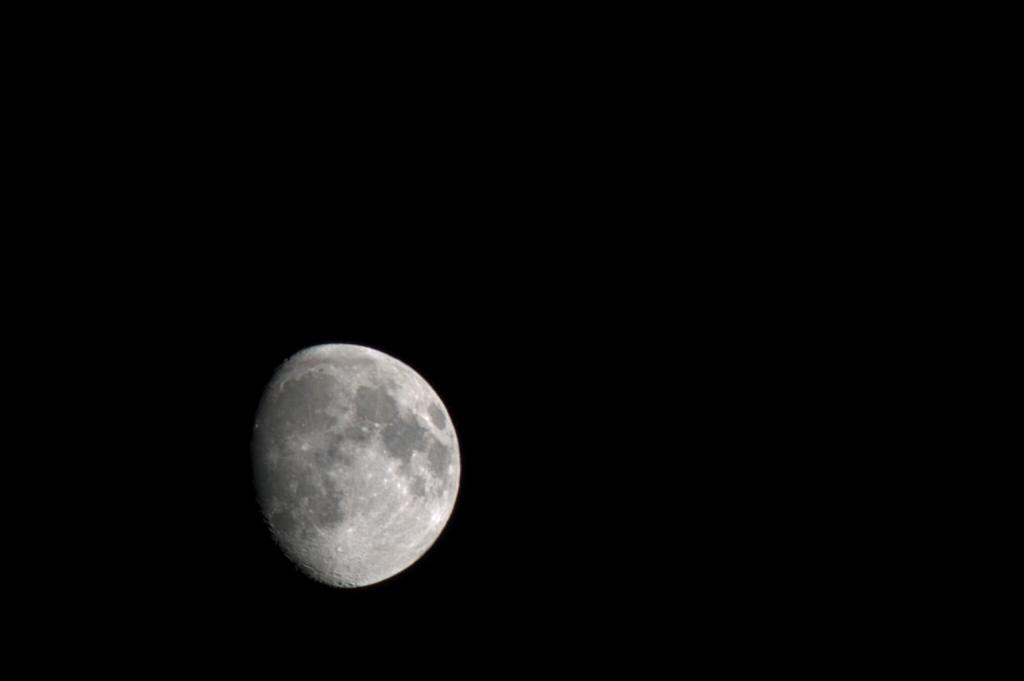
There's already lots of great advise on the camera side of things, so I won't repeat that. However to get the most out of shooting the moon, there are some extra things you can do..
Even the full moon displays a tremendous amount of contrast. If it's not already clear from the above advise; use the lowest ISO, sharpening and contrast settings to retain as much dynamic range as possible.
You'll find that the greatest images of the moon that you see on the internet are rarely single still images, but rather software selected stacks of video frames. The reason is that the light has to plough through the entire atmosphere, and even though the naked eye doesn't show it, turbulence distorts (always some part of) the image. If you do prefer to shoot stills, shoot a lot of them in a row and select the best. You'll be amazed at the differences in detail between consecutive shots with the same settings and everything.
General seeing conditions also play a major role. You're good if you touch the tripod and your hands freeze off.. in other words when the sky is as clear and clean as a whistle. Dust, clouds and humidity rob detail.
But if you get past all that, the moon is a very rewarding subject to shoot.. not only when full, but also when going through its phases.