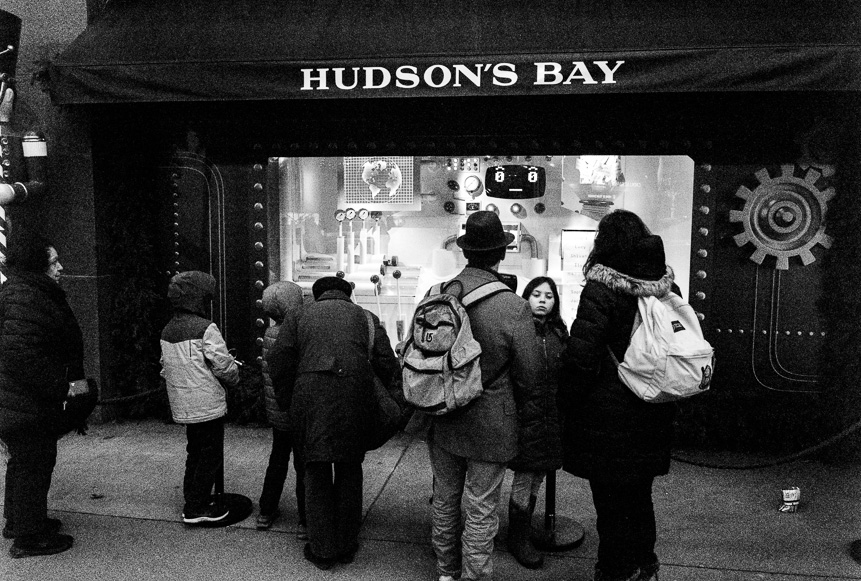
I would limit myself to talk about the photos and wouldn't speak about commuting.
Yet, bracket open : I have been forced, with no other choice left, to commute hard in the past when I was a young father of a very young kid - that was in a not American but ugly capitalist country nonetheless 😀 - and I know that's not fun, sometimes you just have to accept it or you become unemployed, and if you decide to move it's your wife who will either have to commute like crazy or become unemployed herself, so I would advise people here to turn their fingers seven times over their keyboards before posting, what has been written about how commuting was truly paradisiac in the USSR included 😛 - okay, bracket closed.
Photos above : at ISO 2000 the noise becomes really unpleasant with an ugly texture and at ISO 2500 it's awful with, cherry on the cake, some nasty banding.
Exposure compensation to -2 ? Well that would mean ISO 4000 and ISO 5000 if shot as RAW (DNG). While shooting RAW (DNG), using the exposure compensation is the exact same thing as changing ISOs. That has been demonstrated.
So those pics were taken at ISO 2000, ISO 4000 and ISO 5000 actually.
Kostya, you have two options with the digital camera you're using there :
- you don't go over an actual level of ISO 800 - ISO 1600, you get better at taking candid photos at night (look at Brassaï's work for instance), you open your diaphragm a bit more and, moreover, you don't want to take photos at night as if you were taking photos during the day, because it's... well, night,
- you can't help using high ISOs then you must sell this crap of an M-E and buy a Nikon or a Canon FF DSLR. With my old D700 I used high ISOs once (to shoot a theatre play and get speeds over 1/125s with enough of DOF though) and I got way better results at ISO 6400, with very well contained noise and certainly no banding at all.
Ugly digital noise with banding added will not likely pass the "Each one has an idea of what is acceptable and what is not" test.