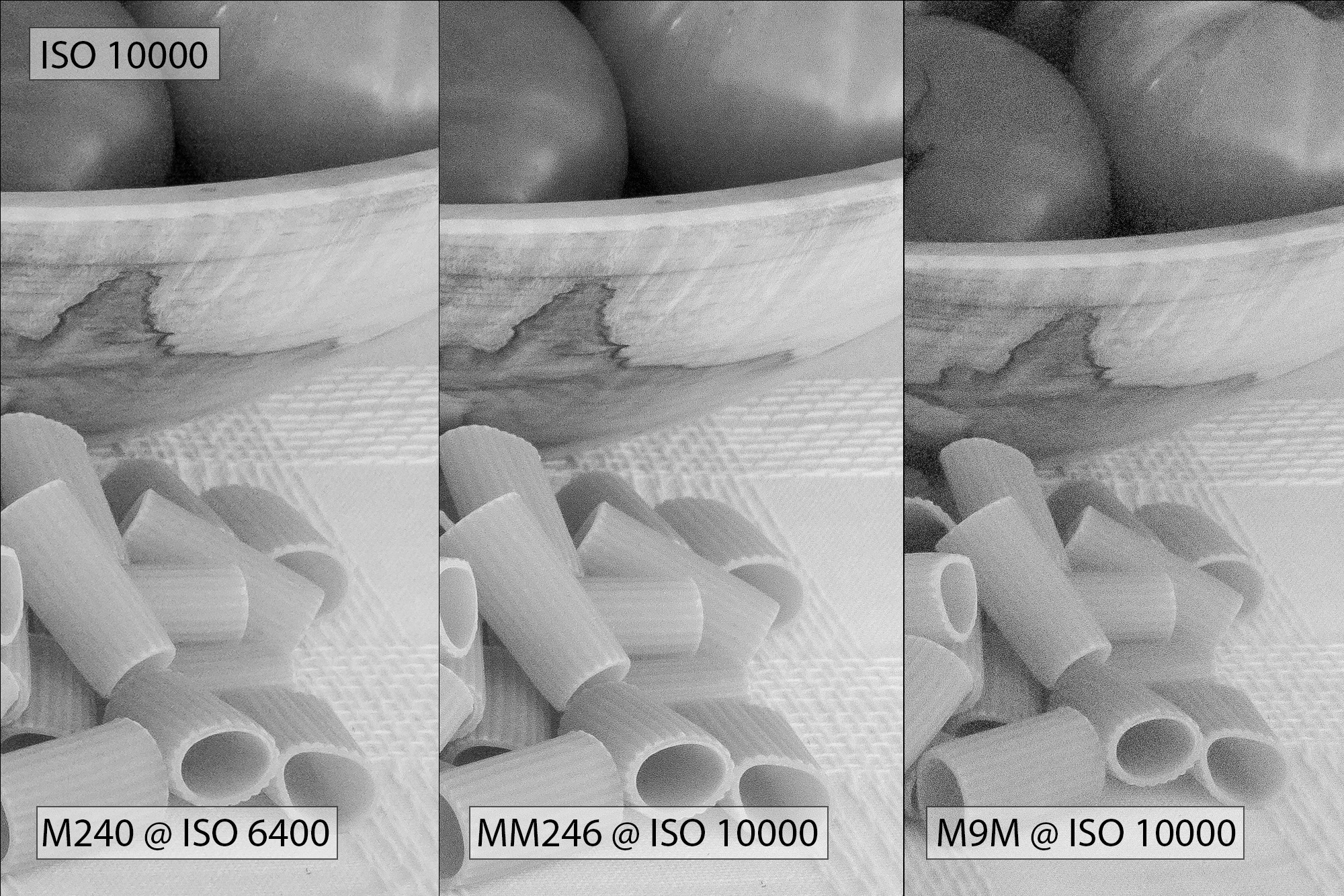
1. I repeat : setting the ISO dial at 1000 with turning the exposure compensation to -2 then pushing by two stops in LR while "developing" the image so that the histogram is correct and the image pops out with normal blacks, greys, whites, is the exact same thing than turning the ISO button to 2000 before depressing the shutter release then not doing anything special in LR. Ditto re. 2000 -> 4000 and 2500 -> 5000. So here the results are bad because your M-E sensor is not good above ISO 1600, it creates much digital noise (of various types, no need to elaborate on this) and banding when no light enough hits its surface. Sensor signal/noise ratio issue, the sensor is the culprit and nothing can be done to turn the problem out but getting another camera with a better sensor, if you definitely cannot be happy with staying below ISO 1600 with the lenses you have and the way you use them for the photos you like to take, was it during the day or at night.
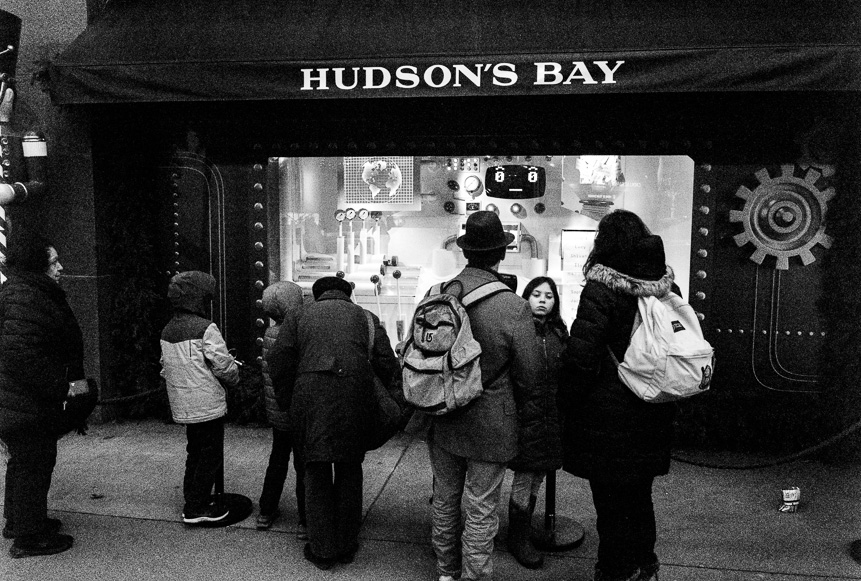
2. It's not at all about switching to Brassaï's tripod but this is about getting somehow inspired with Brassaï's point of view about the night and what makes a night photo interesting and more interesting. Getting out at night with a camera doesn't make you take great photos instantly. Night photos obey to the same rules as daylight photos as for the interest of the subject, the composition, the tones, the light, all in all what the photo tells as for a story. That ISO thing comes later - yet, terrible digital noise and unexpected banding will ruin a masterpiece as well as they will ruin an unsignificant photograph whose place is in the family album only.
A great part of the most beautiful photos of the history of photography were taken under very difficult light circumstances with slow speed films and f/3.5 lenses. So, using a versatile camera able to work from ISO 160 to ISO 800 (let's not even say ISO 1600 which is the upper acceptable limit of the M-E Typ 220 sensor) by just pushing a button and f/2 modern multicoated lenses is plenty enough to face any kind of situation for the advanced amateur photographer.