All things considered, APS-C sensors are pretty close to the size of micro 4/3. I think it would be very very difficult to tell the difference in pictures if possible at all.
If you look at a lot of youtube videos, you will see people comparing Micro 4/3 prints to full frame prints. These are really enlarged as well, and people couldn't tell the difference most of the time.
Most people are looking at web resolution photographs: you can't really tell the difference in quality between a good iPhone photo and a 4x5 inch format print that way.
The main reasons for me to be interested in different formats nowadays comes down to three things:
- Different capture formats render a subject in different ways.
- The lenses available for various different camera systems and formats.
- What my intent for a given tool might be with respect to capabilities, size, weight, and portability.
For example, my "main" grab and go camera is a toss-up between the Light L16 and the Leica CL with either a 28mm or 35mm lens fitted. However, the Panasonic GX9 is an alternative because its format and the lenses I have available to me for it net a total package that is smaller than the Leica, it's far less expensive and a bit lighter weight, and it can return very close to the same quality results. There are times when negative aspects of the L16 (relatively poor responsiveness, more time in rendering workflow) are a stumbling block that the GX9 proves a far better pick than that too... Not to mention video capture that neither the CL nor the L16 do with any real facility, and which is a strong point with the Panasonic camera.
No one camera or format suits all purposes.
Concerning medium format, I think medium format film is worth it. It's also very expensive, and the cameras are clumsier, so I use it less than I thought I would.
A TLR is a great compromise for me since they're pretty small compared to a MF SLR.
My Hassy 500CM with the standard Planar 80mm and WL finder isn't much larger than a typical Rolleiflex TLR, even the f/3.5 models (I have had both together many times). It is a bit heavier, but that's a pretty minor difference. It is more complex and requires different handling techniques, however, particularly in low light.
I'm pretty sure cameras with multiple sensors like the Pixii will be the "future" for compact, high quality dedicated cameras in the future. But the cost of creating all those little sensors and tiny lenses seems like almost the same as one bigger sensor anyway.
But we'll see. I don't think anyone would want their phone riddled with cameras more than the 3-4 sensors they already have, but if someone were to hand me a small camera that could take full frame or APS-C quality photos, I'd take it.
The
Pixii has only one sensor, a 12 Mpixel APS-C format sensor. I suspect you're thinking of the Light L16, which is a 16 camera computational photography camera capable of producing up to 50Mpixel images, nominally. It's only a little bigger than an iPhone 8 Plus smartphone ...
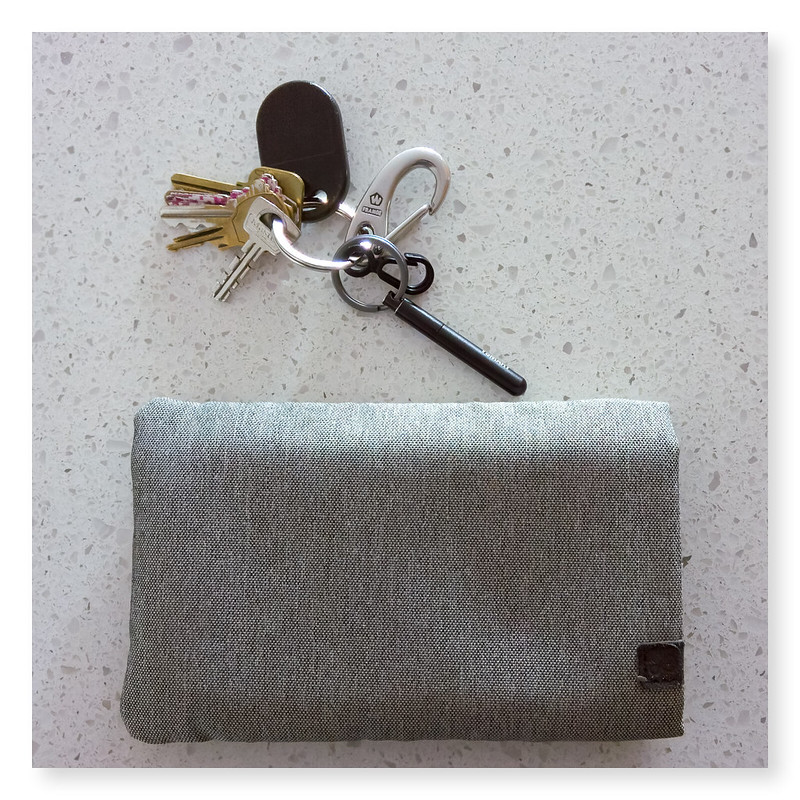 Camera vs Keychain
Click on the photo to go to my 2020 album of Light 16 photographs.
It's much smaller and lighter than anything but some folded medium format folders, like my Voigtländer Perkeo II, and can produce image quality on par with a Hasselblad medium format digital when used to best advantage. I've owned and been using it since 2017 and it's a delightful, if quirky, piece of equipment. It certainly has its limitations, but it's made some beautiful photographs for me over the past few years.
G