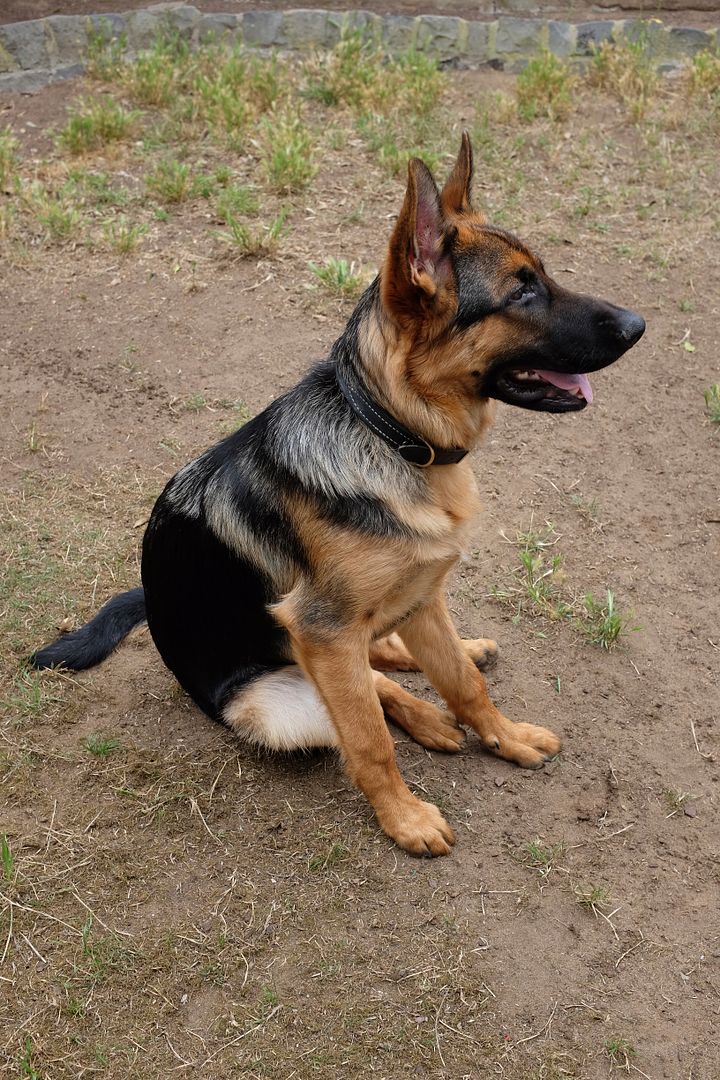
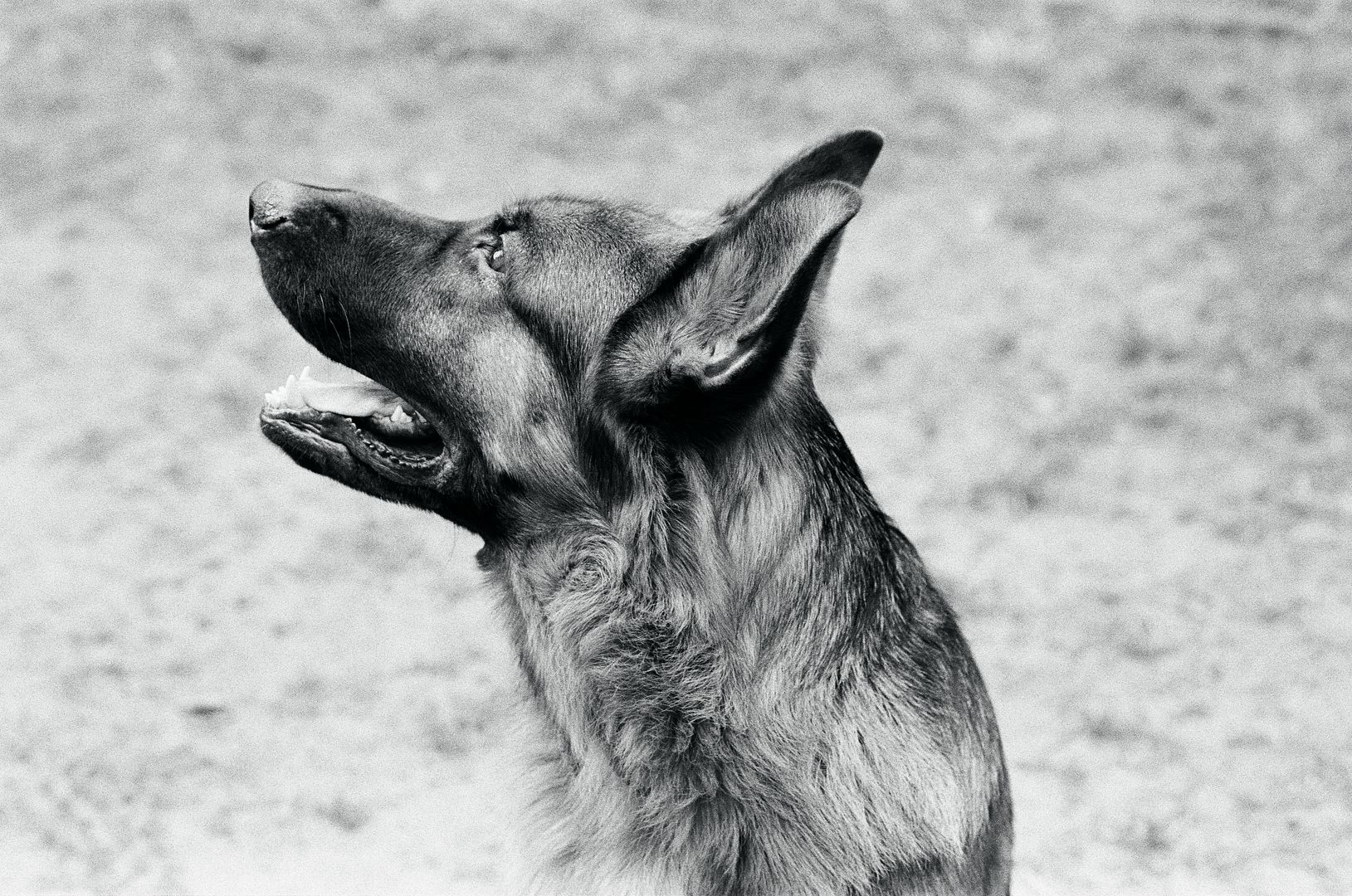
The 3D effect ... ?

My Leica pre-asph lenses have this 3D effect when stopped down to about f2.8 or even better f4. For example the 35mm Summicron has this.

 
Another way to see it is where a figure exhibits dimensional modeling in gestures (armature), drapery, folds, shadings, light--especially against relatively flat backgrounds.

med_U45148I1410043833.SEQ.0.jpg


Although this comes from a skatepark, the composition/perspective/modeling is old as da Vinci.
 
Here are some other discussions of this:

Earlier threads of ours
http://www.rangefinderforum.com/forums/showthread.php?t=50926

http://www.rangefinderforum.com/forums/showthread.php?t=75932

See some of the photos here
http://www.stevehuffphoto.com/2010/01/23/the-leica-35-summarit-lens-review/
and look at comment #5 by Matthias Frei

http://www.stephenattaway.com/blog1/?cat=8

See first sentence, last Para in section on Imaging Performance, here
http://lavidaleica.com/content/zeiss-zm-lenses

Giorgio
 
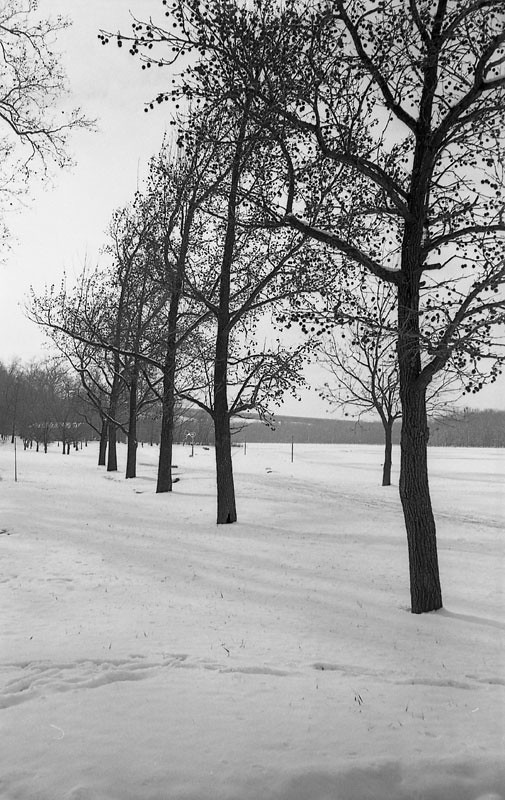
3D to me is when your eyes go deeper into the photo and see that 3rd dimension. It can be a function of the lens, aperture, light or composition. You don't see depth in completely OOF backgrounds even though you may see a gradual and smooth transition.


Take a look at the following photo and tell me where your eyes go immediately?


5711470371_2fd1e8bdb9_b.jpg


I don't know about you but my eyes immediately focus on the last 3-4 trees in the middle line. Subconsciously, I am already seeing deep into the photo.


The following photo is anything but flat. The way different subjects are positioned makes you appreciate depth. I think the sloping ground, it's intersection with the water at an oblique angle and the distant horizon help it too. There is no bokeh or OOF areas, just a plain old view that our eyes are used to looking at. I feel this photo definitely pulls you in.


14735502659_ced0686de4_b.jpg


Comments?
 
This topic crops up from time to time. Each time it crops up, we have difficulty defining what it is we are discussing.

For me, 3D effect, sense of space, plasticity of the image is not the same as a sharply focused foreground subject against a defocused background field, or "pop". I am with Roger, cpc, and Darshan that a defocused background does not provide 3D characteristics.

These discussions also have at least three groups -- those who say it cannot exist, because all prints are two dimensional those who say it is created by some characteristics of the subject (receding lines, etc), some who say that it is created by characteristics of the lighting (side lighting, etc), and some who argue it is a characteristic of the lens, and possibly the aperture used.

I think that both subject and lighting can accentuate the effect. I also think that some lenses at some apertures bring it when others don't. There have threads identifying some of these.

Unfortunately, I cannot post pairs -- with one pic showing it and another not, but...

two lenses that I remember --

cv 40mm nokton, seems to provide this at 2.0 and 2.8, but not at 1.4

the Novar 6.3 on Ikonta c's also -- not so much the tessar

Am I blowing smoke or do others see it this way, too?

Lighting and composition can certainly imply depth. FWIW, a series (I've written) on depth in 2D images:
Part 1
Part 2
Part 3
Rooted in cinematography, but most of it understandably applies to stills.
 
Lighting and composition can certainly imply depth. FWIW, a series (I've written) on depth in 2D images:
Part 1
Part 2
Part 3
Rooted in cinematography, but most of it understandably applies to stills.

Wow, excellent write up.

Your detailed and scientific explanation with examples prove what I have observed as a lay person. Thanks for sharing, it makes more sense now.
 
My best lens for the '3D' effect is the 6x7 105mm f2.8 Pentax, when close to wide open. But I also find that wide open lenses that have a slight vignette also produce this effect.

6x7 f2.8 105mm Pentax:

10806480914_7c553b5603.jpg


This is a cheap Japanese 50's folder that seems to have so many flaws (including vignette) that it produces '3D' at wide open.

13063900673_88cc98f617.jpg


Also, and this is in the trick photography realm, is the rear bellows Super 23 that can produce a '3D' effect:

15133877326_4fdc22e559.jpg
 
View-Master stereoscopes were very popular when I was a kid..
Talk about bringing back memories.. When I got one, the 3D aspect wasn't emphasized much, probably wouldn't have understood what that meant anyway at that time. Still, I found the images amazing, almost more than lifelike..

In hindsight, it's not only the stereoscopic sight that gave that depth, it's also that they were slides, albeit tiny ones. When it comes to 3D effect and pop, I find nothing compares to an MF slide on a light table..
 
Wow, excellent write up.

Your detailed and scientific explanation with examples prove what I have observed as a lay person. Thanks for sharing, it makes more sense now.

Thanks.
It is hardly scientific, though. I guess it is the language that makes it sound so. 🙂
 
I agree that lighting has a very strong effect on the perception of 3D.
.
webprint310.jpg
.
In fact a very OOF background can be seriously annoying. In the real world, your eyes auto-refocus as they scan the scene. The viewer cannot scan an OOF picture background and clearly see what they are looking at.
Even further, the OOF background effect can make the subjects looks like cardboard cutouts propped in front of a background screen (the look of some scenes in 1930's movies).
 
Okay, I've been thinking about this.

I think the "3D effect" is the product of a certain type of spatial confusion that only arises from a very particular set of circumstances.

I think the most important of these circumstances is the ability to see the actual transition from in-focus to out-of-focus in terms of depth.

Here is an example of one of my photos that is does not display the "3D" effect:

6630917781_4798b266a5_z.jpg


Although the subject is fairly sharp and the background is out of focus, it doesn't trick the mind in the way these two photos do:

7561339112_4292dce970_z.jpg


8282120764_046e988b9c_z.jpg


Subject distance plays a certain role in the effect, as does aperture/shallow DoF.

Moreover, I think the "3D effect" is not a yes/no characteristic; I think happens in degrees--some images display the effect more strongly than others.
 
My best lens for the '3D' effect is the 6x7 105mm f2.8 Pentax, when close to wide open. But I also find that wide open lenses that have a slight vignette also produce this effect.

6x7 f2.8 105mm Pentax:

10806480914_7c553b5603.jpg


This is a cheap Japanese 50's folder that seems to have so many flaws (including vignette) that it produces '3D' at wide open.

13063900673_88cc98f617.jpg


Also, and this is in the trick photography realm, is the rear bellows Super 23 that can produce a '3D' effect:

15133877326_4fdc22e559.jpg


I do agree with you about the Takumar 105/2.4! Wow, what a lens apart from the "3-D effect".

Here is another candidate: Meyer-Görlitz Orestor 135/2.8...

14101404_small_zpse6171c3b.jpg
 
I agree that lighting has a very strong effect on the perception of 3D.
.
webprint310.jpg
.
In fact a very OOF background can be seriously annoying. In the real world, your eyes auto-refocus as they scan the scene. The viewer cannot scan an OOF picture background and clearly see what they are looking at.
Even further, the OOF background effect can make the subjects looks like cardboard cutouts propped in front of a background screen (the look of some scenes in 1930's movies).


Hi Dave
This is beautifully done! 🙂
Truly excellent.
 
I agree that lighting has a very strong effect on the perception of 3D.

In fact a very OOF background can be seriously annoying. In the real world, your eyes auto-refocus as they scan the scene. The viewer cannot scan an OOF picture background and clearly see what they are looking at.
Even further, the OOF background effect can make the subjects looks like cardboard cutouts propped in front of a background screen (the look of some scenes in 1930's movies).
Dear Dave,

Seconded. But there must also be very considerable differences in individual perception of depth, because several of the pictures seemingly proudly posted on this thread exhibit considerable differential focus, verging on nauseating in some cases, but to my eyes without any three-dimensional effect whatosoever. They are, as you so aptly say "like cardboard cutouts propped in front of a background screen "

Cheers,

R.
 
Dear Dave,

Seconded. But there must also be very considerable differences in individual perception of depth, because several of the pictures seemingly proudly posted on this thread exhibit considerable differential focus, verging on nauseating in some cases, but to my eyes without any three-dimensional effect whatosoever. They are, as you so aptly say "like cardboard cutouts propped in front of a background screen "

Cheers,

R.

... yep, agreed
 
Back
Top Bottom